
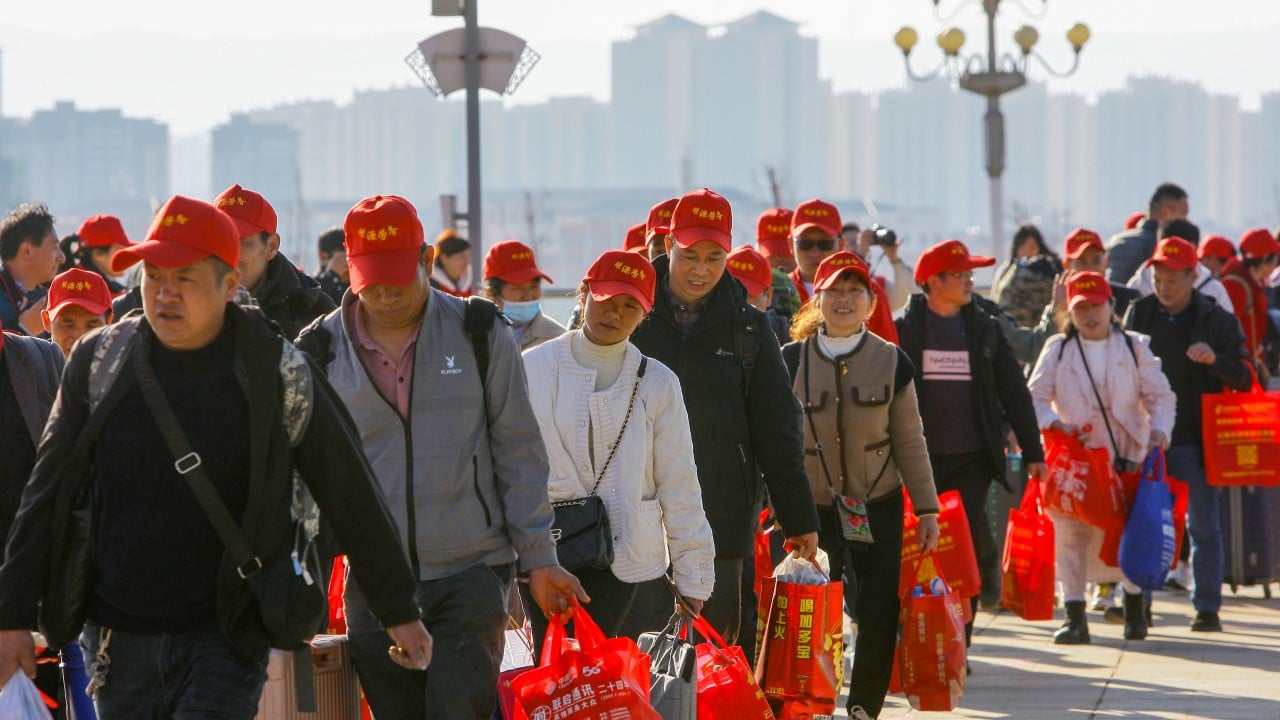
China has moved to ease residency restrictions that prevent migrant workers from accessing social insurance where they work, in a sweeping effort to expand coverage and strengthen labour protections nationwide.
The new measures were announced on Friday by the State Council, China’s cabinet.
The move is part of China’s broader push to create a unified national market by removing barriers to the free flow of capital and talent.
Advertisement
Under the new policy, workers can enrol in social insurance programmes in the cities where they are employed, regardless of their official hometown registration, or hukou.
Authorities will also refine the mechanisms for transferring and continuing social insurance relationships across regions, a long-standing challenge for a highly mobile workforce.
Advertisement
It reflects China’s latest policy reform emphasis on achieving renhu fenli – or the “separation between place of residence and household registration”. According to census sample data released on Friday, China’s migrant population has surpassed 357 million.
Historically, the hukou system locked migrant workers out of vital public services – like healthcare and public schooling – in the places where they lived and worked. In recent years, however, these rigid restrictions have been progressively relaxed.