
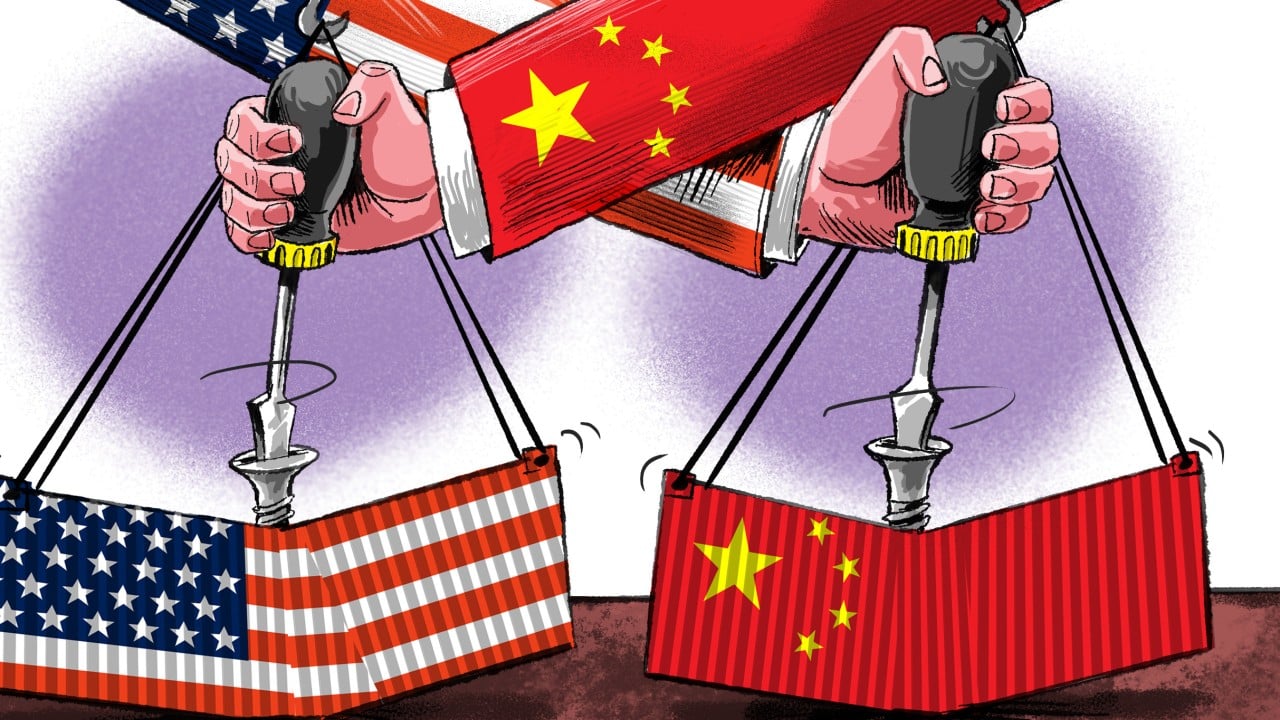
At last week’s summit in Beijing, the presidents of China and the United States pledged to steer towards a stable and constructive relationship. The two sides announced new joint trade and investment councils. This combination of high-level commitment and institutional progress has stirred hopes that long-running bilateral economic tensions will ease substantially, if not take a turn for the better.
But will the world’s largest economies live happily ever after? History offers a sobering parallel. At the conclusion of his November 2017 visit to China, US President Donald Trump described the trip as successful. With over US$250 billion in deals, his host agreed. Yet months later, Trump launched the trade war that continues to this day.
His record since last year’s summit in Busan, South Korea, is similarly revealing: talking the talk, but not walking the walk. Washington’s pattern has been clear: diplomatic niceties paired with unrelenting pressure. The script is familiar – promise stability while tightening the screws.
Advertisement
The US International Trade Commission has launched an investigation into revoking China’s Permanent Normal Trade Relations status. A US Treasury rule restricts American investment in artificial intelligence, quantum computing and semiconductors. The 2026 National Defence Authorisation Act bans Chinese AI models from US defence systems.
The Federal Communications Commission has adopted a new rule that will no longer recognise telecommunication test reports issued by laboratories in China. Just days before the latest Xi-Trump summit, nine more Chinese firms were blacklisted over Iran links.
Advertisement
In essence, there has been no real trade truce, only a tariff truce.