
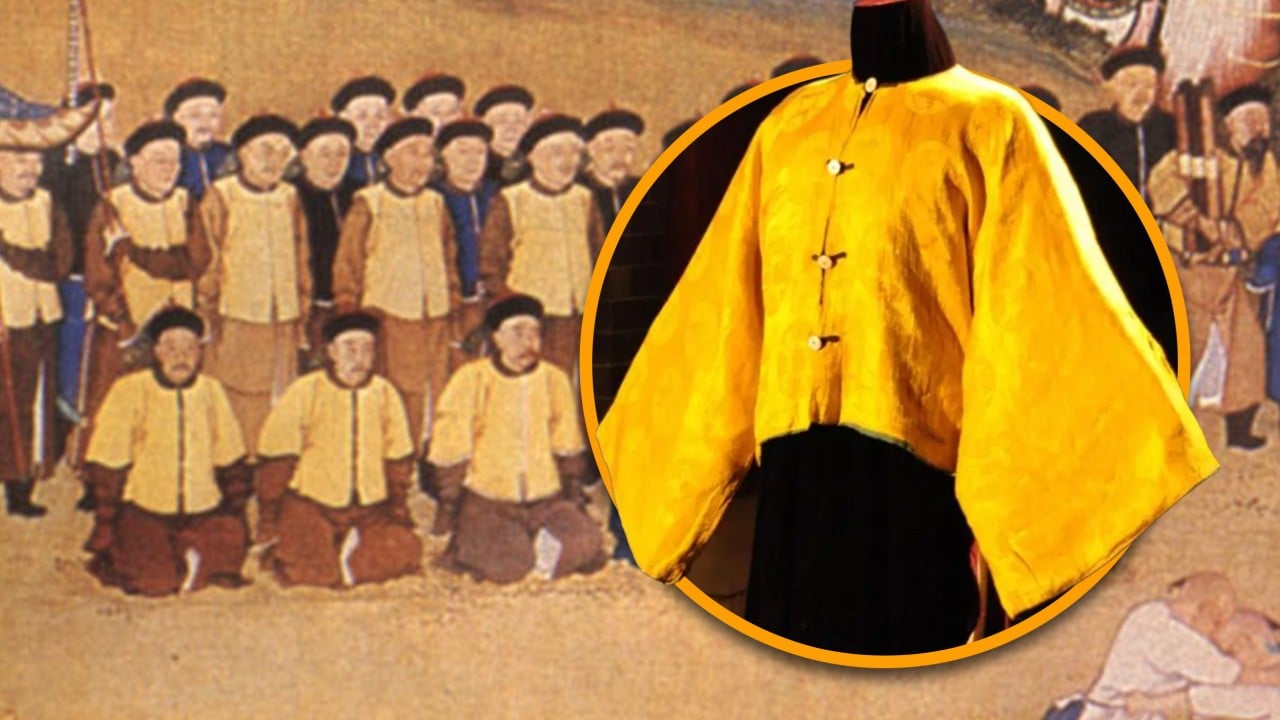
In ancient China, ordinary people were not allowed to wear yellow as it symbolised the imperial power, apart from one exception: the emperor’s yellow jacket.
Magua is a style of jacket worn by Manchu males during the Qing dynasty (1644–1912). It was worn over the long robe as protection while riding horses.
Huang magua, or the imperial yellow jacket, has a special meaning due to its colour.

In Qing dynasty, only the emperors, empresses and empress dowagers could wear yellow. Ordinary people were not allowed to dress in the colour. Even crown princes were only allowed to use yellow on small accessories.
Advertisement
The tradition of yellow being the imperial colour began in Sui dynasty (581-618), when the Emperor Wen of Sui started the trend of wearing yellow.
He ignored the then attire policy that required emperors to wear white on important occasions and chose yellow out of his personal preference. Later, he even adapted his court robe into yellow.
Advertisement
Officials and ordinary people followed suit and yellow once became an “in” colour in the Sui dynasty.