Andrew Sheng is a former central banker and financial regulator, currently distinguished fellow at the Asia Global Institute, University of Hong Kong.
The old order is dead. We just don’t know what will replace it. As Henry Kissinger reminded us in his 2014 book World Order, “no truly global order has ever existed”. After US President Donald Trump’s erratic actions, the gloves are off. American comedians and Iranian Lego cartoons tell us all we need to know about the demise of the old order.
If the unipolar order is not viable, and America is abandoning the multilateral order and the rules of the game it created after World War II, what are the alternatives?
Given the United States’ perfidy as an ally, Canadian Prime Minister Mark Carney is pushing for a coalition of middle powers, what I call “midi-lateralism”, whereby the likes of Canada, Australia and the European Union, those with significant economic clout but not superpower status, unite to find a third path of autonomy, pushing back against great powers’ might-is-right bullying.
Advertisement
Another emerging alternative is “minilateralism”, the variable geometry of small countries working together quietly to become more self-reliant and minimise great power disruptions.
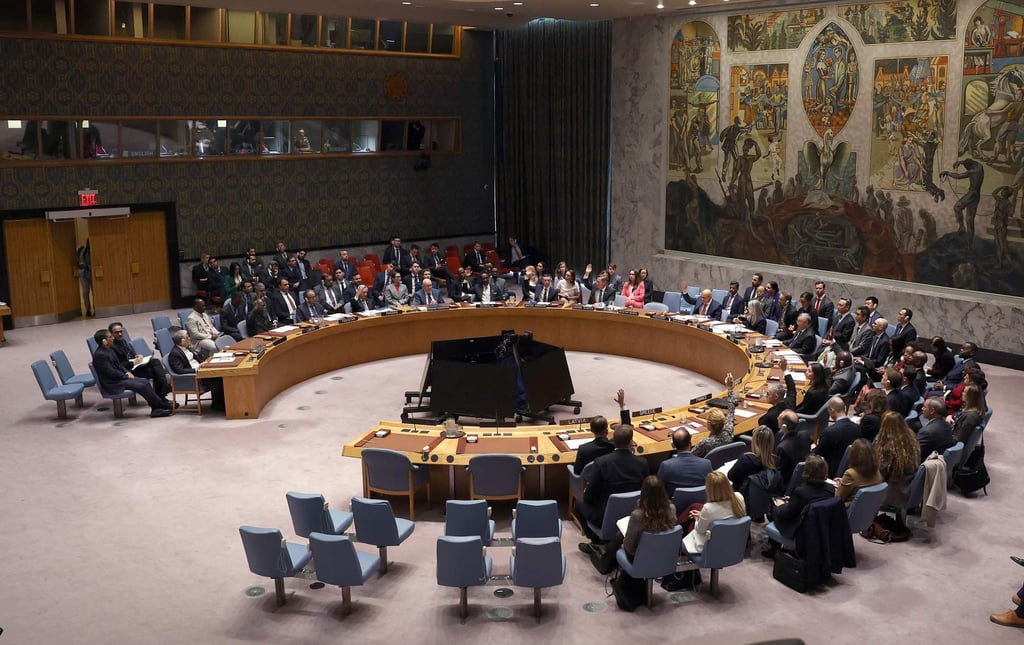
The United Nations membership reflects a pyramid of 193 members, mostly small countries, dominated by a handful of great powers who can veto what they do not like in the Security Council.
Advertisement
The top two – China and the US – account for 32.8 per cent of world gross domestic product in purchasing power parity terms as of 2025. The next 16 UN members with the largest proportion of world GDP – with the sole exception of India at 8.7 per cent – have shares ranging from 3.5 per cent to 1.3 per cent. These 16 countries account for 40.2 per cent of world GDP. This leaves the vast remainder of 175 countries making up 27 per cent of global GDP