
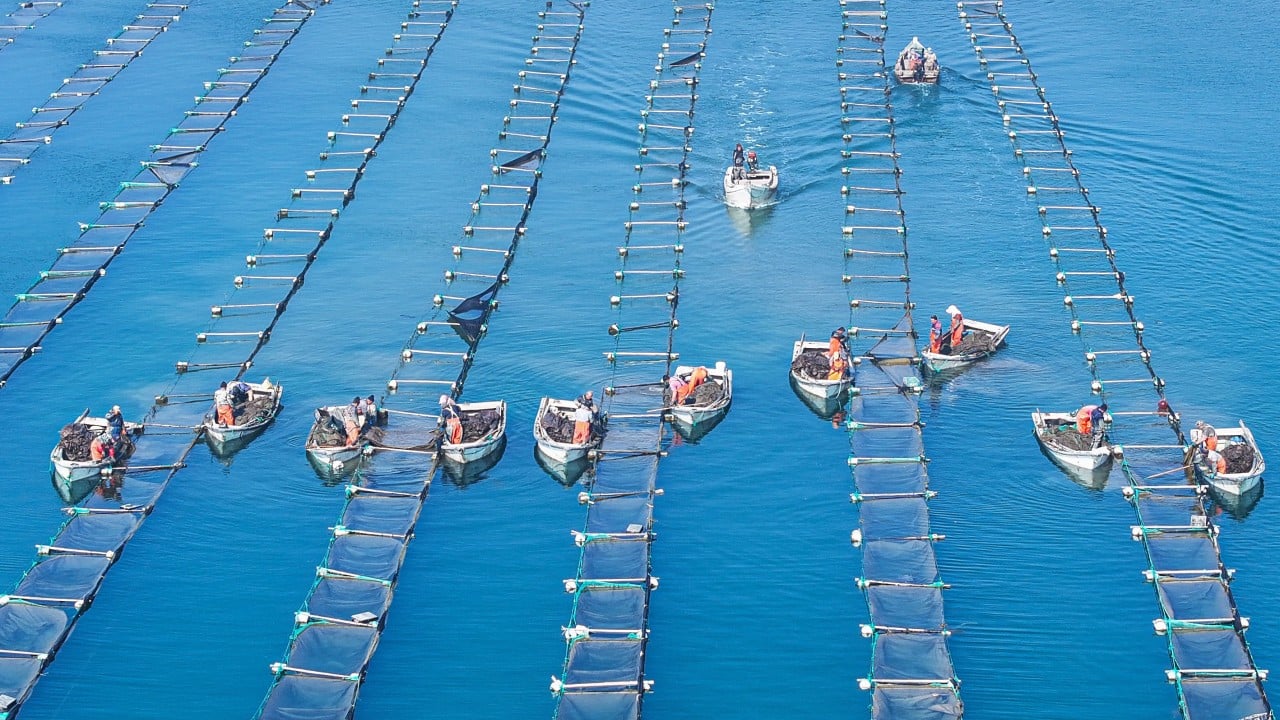
China’s coastal aquaculture ponds are shrinking due to environmental policies while India’s are expanding at the fastest rate of any country, according to a new bird’s-eye view of fish farms worldwide.
The conclusions are based on a fresh dataset compiled from millions of satellite snapshots of coastal aquaculture around the world in 2022.
From 1990 to 2016, the global pond area for aquaculture expanded rapidly. After 2017, the overall area declined, but changes varied between countries.
Advertisement
The work was carried out by researchers from the Northeast Institute of Geography and Agroecology of the Chinese Academy of Sciences and teams from various countries, including Britain and the United States. The results were published in the academic journal Science Bulletin on April 15.
This dataset provides a first-of-its-kind map of the world’s coastal aquaculture ponds, documenting their annual spread and transformation.
Advertisement
India was the biggest source of growth in the sector, expanding by 676 sq km or 19 per cent, between 2017 and 2022 as demand for seafood rose, according to the study.
However, around the same time – from 2016 to 2022 – China’s coastal aquaculture area shrank at the highest rate, or 18.1 per cent. This was driven by environmental policies to protect and restore coastal wetlands, though China still has the most intensive network of fish farms globally.