
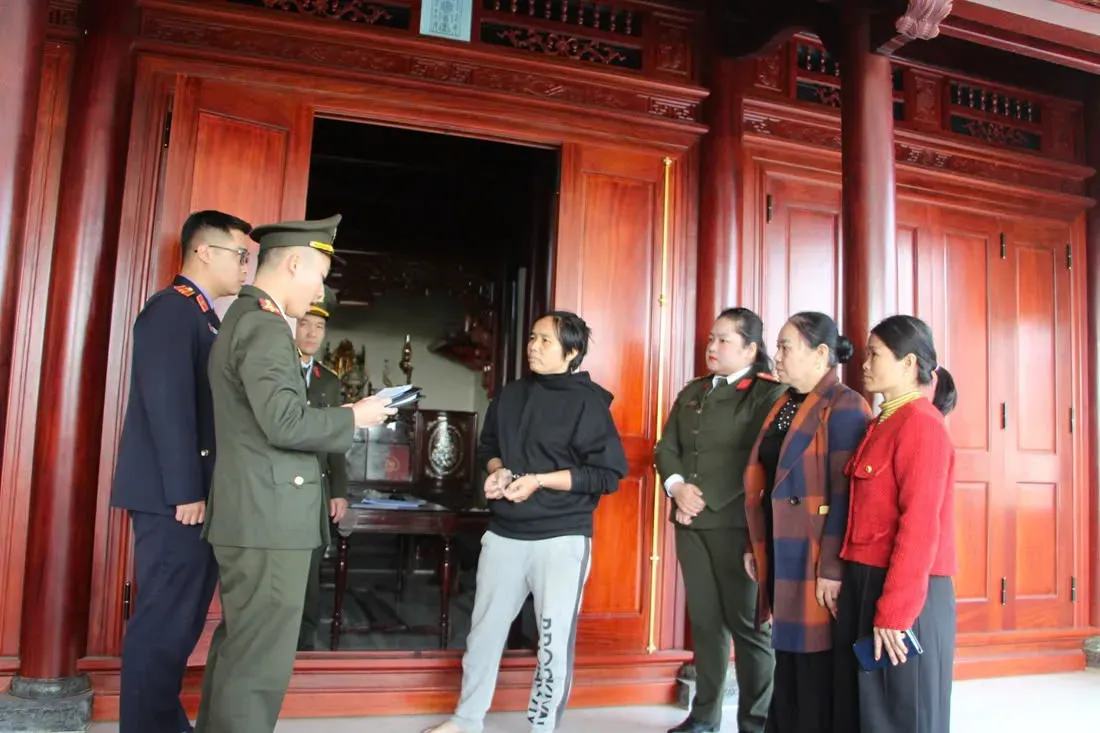
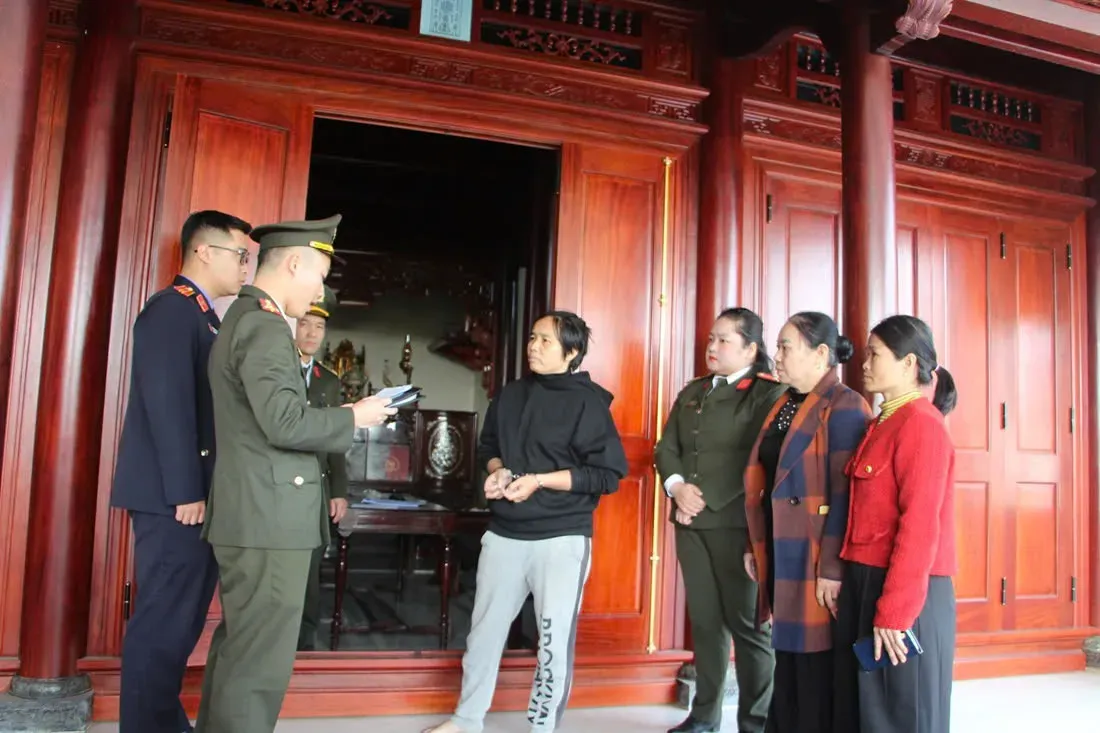
On Jan. 11, 2026, police in Nghệ An Province searched the home of Hồ Thị Hải, 45, in Quỳnh Mai Ward and temporarily detained her. She faces charges under Article 331 of the Criminal Code for “abusing democratic freedoms to infringe upon the interests of the State and the lawful rights and interests of organizations and individuals.”
According to a public statement, authorities seized “numerous documents and objects related to the alleged violation.” Provincial police claim that Hải “fully admitted to her criminal actions” during questioning and announced that they will “continue to investigate and expand the case.”
However, in a video of the arrest shared on the official Nghệ An Television fan page, Hải appears to offer some resistance to law enforcement’s actions.
Who Is Hồ Thị Hải?
Luật Khoa Magazine reports that Hồ Thị Hải is a native of Quỳnh Xuân Commune, formerly part of Quỳnh Lưu District and now located in Hoàng Mai Town, Nghệ An Province.
Hải has been a regular figure in protests and advocacy activities regarding the widening of National Highway 1A, which runs through her community. Local residents have been fighting for fair compensation for years after the highway project requisitioned their land.
What Are Residents Saying?
Dozens of residents expressed outrage at Hải’s detention in the comments section of the Hoàng Mai News Facebook page, an outlet for Hoàng Mai Town.
“Fighting for the people’s rights and still being arrested—who will dare to stand up now?” one commenter wrote.
Similar sentiments appeared under a separate Facebook post by Nghệ An Newspaper, where many voiced dissatisfaction and dismay. These reactions highlight a deep frustration among residents regarding the authorities’ handling of land compensation grievances. They also mirror a growing belief that the authorities are responding to advocacy with punitive action instead of negotiation.
Lack of Clarity Around the Charges
Despite charging Hải with “abusing democratic freedoms,” Nghệ An police have not disclosed the specific nature of the alleged violation or detailed which documents and objects were seized. The authorities’ broad statement makes it difficult for outside observers to determine exactly what Hải is accused of doing.
State media coverage has largely mirrored the police narrative, offering little additional context. Crucially, these reports have omitted the longstanding land compensation issues in Quỳnh Xuân Commune, which form the backdrop to Hải’s activism.
Land Compensation Struggles in Quỳnh Xuân and Quỳnh Mai
Hải’s community, formerly Quỳnh Xuân Commune and now part of Quỳnh Mai Ward, has been embroiled in land compensation disputes for decades.
Following the appropriation of land for the highway expansion project between 1994 and 1998, hundreds of households failed to receive adequate compensation. For years, residents petitioned local authorities but received little meaningful response.
In 2020, the central government allocated 222 billion đồng to resolve the issue in several districts. However, the allocated funds proved insufficient, which forced provincial authorities to request an additional budget. Although the local government allocated more resources in 2024 and reported progress later that year, hundreds of displaced residents were still protesting for fair payment by mid-2025.
Political and Legal Environment
Hải’s arrest is part of a broader crackdown on dissent preceding the 14th National Congress of the Communist Party of Vietnam, held from Jan. 19 to 23, 2026.
Earlier in the month, the Ministry of Public Security prioritized “ensuring security” by pledging to “strictly handle the dissemination of harmful, distorted information.”
This directive coincided with a wave of arrests, including that of Facebooker Hoàng Thị Hồng Thái in Hà Nội, who was charged under Article 117 of the Criminal Code for “activities against the state.” Authorities also targeted dozens of social media accounts accused of spreading “reactionary” content.
In many of these cases, authorities rely on Article 331—“abusing democratic freedoms”—a provision that grants the state broad power to penalize dissenting expression.
Hoàng Nam wrote this news article and published it in Luật Khoa Magazine on January 12, 2026. The Vietnamese Magazine holds the copyrights of its English translation.