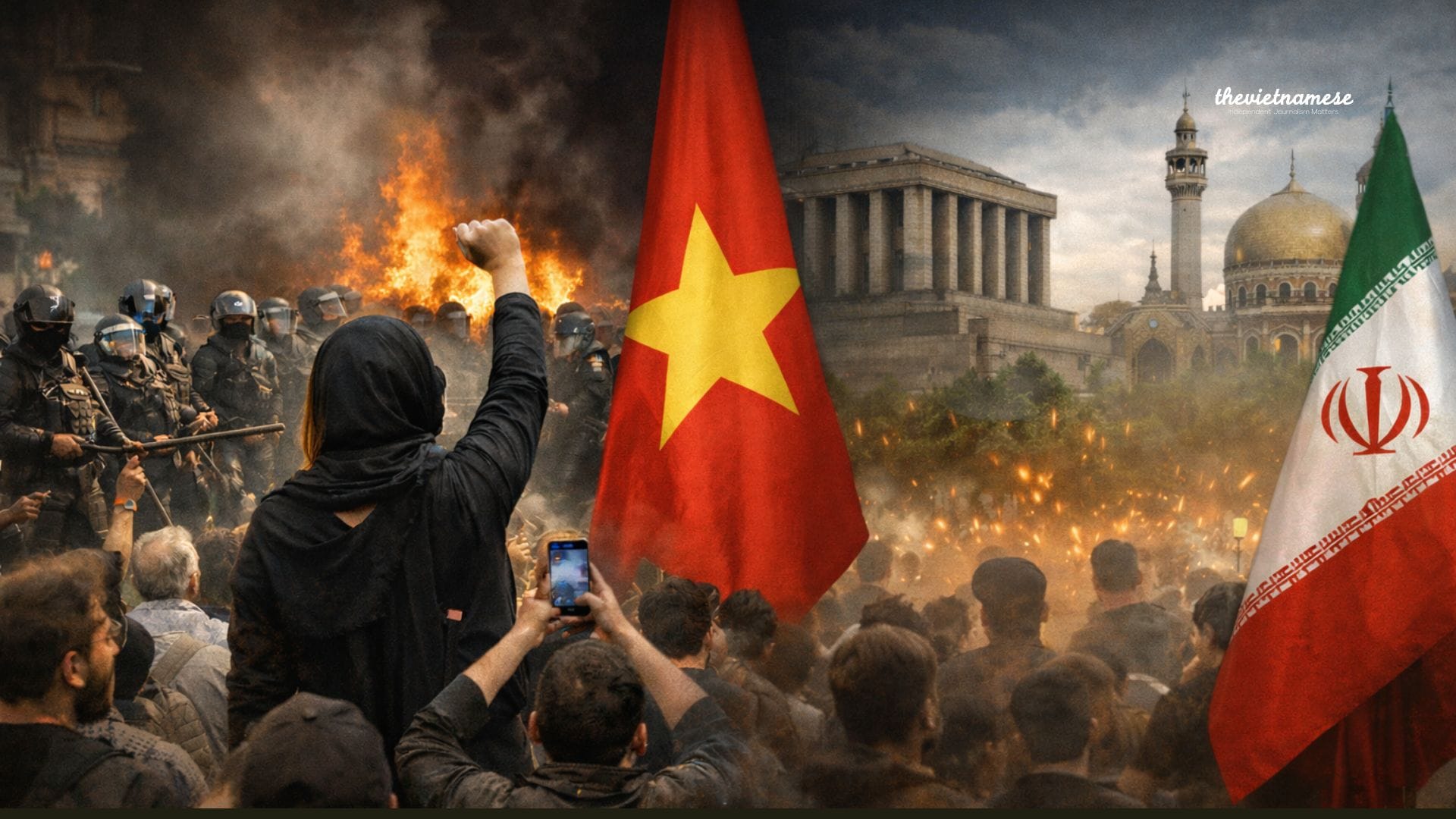
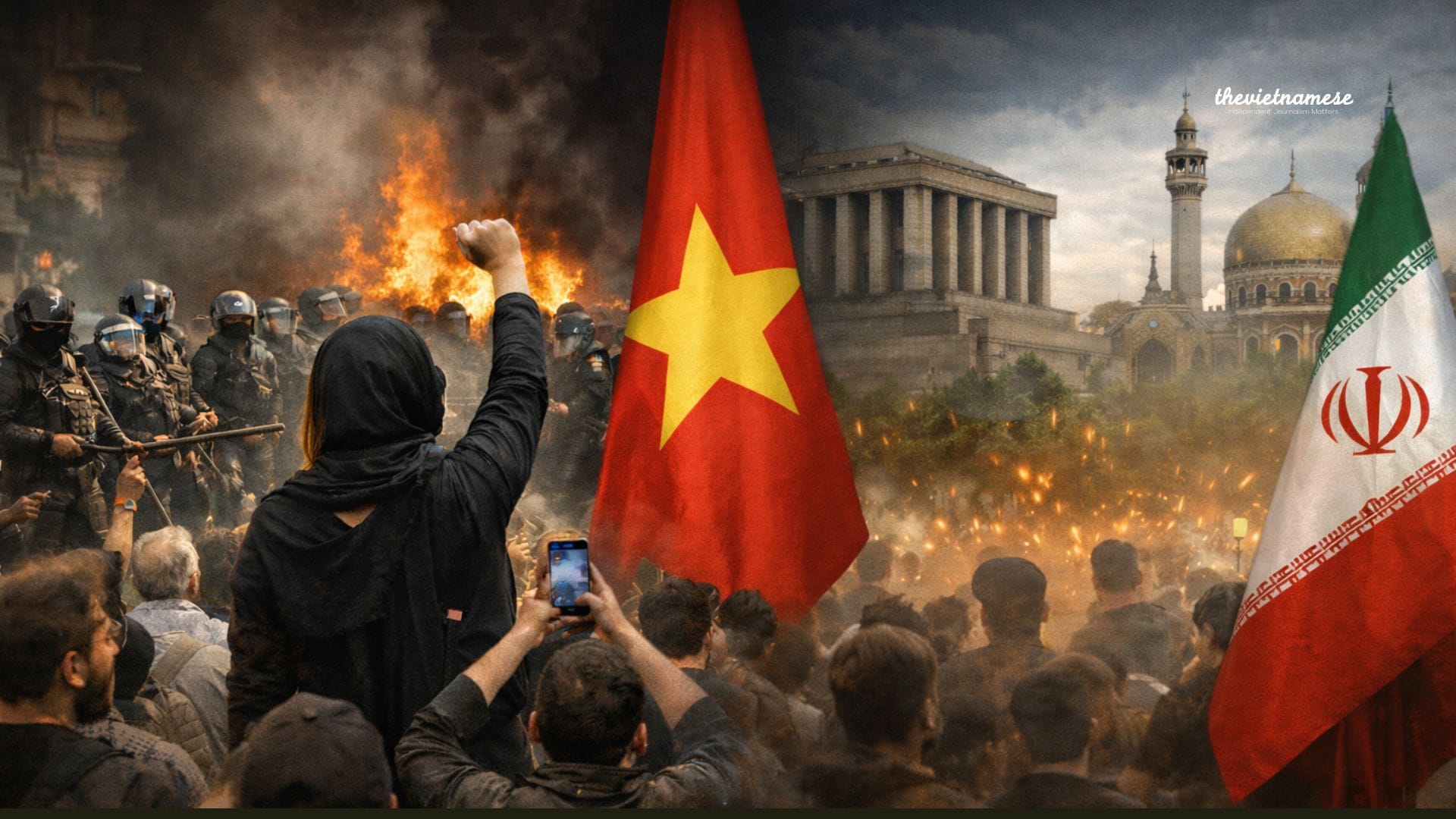
The escalating unrest in Iran is making international headlines. What began as public frustrations over economic conditions and a weakening currency has quickly evolved into mass anti-government demonstrations across all 31 provinces.
Protesters have been voicing a broader set of demands, ranging from expanded social freedoms and improved economic opportunities to official recognition of ethnic minorities’ languages and culture.
The Iranian regime, instead of holding dialogues with citizens, reportedly weaponized its security forces to suppress largely peaceful demonstrators with assaults, tear gas, and live ammunition. Current estimated casualties and arrests vary, but the figures look grim.
According to the U.S.-based Human Rights Activists News Agency, the death toll in Iran as of Jan. 14 has soared and surpassed 2,500, while nearly 17,000 protesters have been arrested during the past three weeks of demonstration.
The security forces also reportedly [1] loaded bodies of deceased demonstrators onto a truck and silently left the scene. The nationwide Internet blackout imposed by the Iranian government complicates efforts to calculate an exact figure of casualties. It prevents residents from sending footage of police violence outside the country.
The Vietnamese Magazine verified the abovementioned details with information provided by our source, an Iranian journalist who wishes to remain anonymous.
Amid this tumultuous backdrop, international human rights bodies and governments around the world have released public announcements condemning the Tehran regime’s use of excessive force against demonstrators.
Volker Türk, the United Nations High Commissioner for Human Rights, called [2] for an end to the violence against peaceful protesters and raised an alarm over the regime’s decision to punish demonstrators with the death penalty.
European Parliament President Roberta Metsola rallied EU leaders to exert stronger pressure on the Iranian leadership and suggested the Islamic Revolutionary Guard, the main perpetrators of reported homicide and the assault on civilians, be added to the EU’s terrorist list. The U.S. State Department has not published any criticisms of Tehran but advised American citizens to “leave Iran now.”
However, on Jan. 23, Việt Nam, a current member of the UN Human Rights Council, voted against a resolution introduced during the council’s 39th special session focusing on the worsening human rights situation in Iran.
The resolution, which proceeds to extend the mandate of the Independent International Fact-Finding Mission on Iran for two years and the mandate of the Special Rapporteur on the situation of human rights in Iran for one year, received a total of 25 approvals, 14 abstentions, and seven objections.
This document would also pave the way for an urgent investigation by an independent fact-finding mission to document and investigate state repression of nationwide protests in Iran. Other member states voted against the resolution, including Cuba, China, India, Indonesia, Iraq, and Pakistan.
The Continued Utter Silence from Việt Nam
Despite the strong global reactions, Việt Nam’s Ministry of Foreign Affairs has remained silent on the issue, failing to condemn the killing of unarmed civilians or declare the evacuation of Vietnamese citizens.
State media reported that around 20 Vietnamese nationals were living in Iran as of June 2025, including consular staff of the embassy in Tehran. This silence stood in contrast to the prompt evacuation announcement [3] following a brief exchange of missile attacks between Iran and Israel in June 2025.
The Vietnamese Magazine contacted the Vietnamese Embassy in Tehran to clarify its official stance on the current crisis and the safety measures being implemented for its citizens. The embassy did not respond to our request for comment.
Hà Nội and Tehran established a formal diplomatic relationship on August 4, 1973, during the last years of the Vietnam War. After the 1979 Islamic Revolution prevailed over Iran, Việt Nam, then a unified Communist state, sent a congratulatory letter to the new regime and maintained engagement with the Islamic Republic.
Despite their differing political models and the vast geographical distance between them, the two countries were similarly authoritarian regimes governed by a group of respective non-elected ideological and theocratic elite classes.
Also important, Việt Nam’s self-declared multilateral diplomatic policy has positioned [4] itself as a reliable partner of Iran, constructing a bilateral trade network and helping the latter navigate the U.S. and EU’s sanctions due to its nuclear program, human rights record, and support for terrorism.
A shared autocratic foundation also determined how the Vietnamese authorities reacted to the ongoing unrest. While remaining diplomatically silent on the reported carnage, Việt Nam has utilized its controlled state media to mislead its domestic audience by parroting Tehran’s propaganda lines.
The close-knit security cooperation and training [5] between the two national law enforcement agencies also put Hà Nội on the spot, given increasing evidence of the use of violence against demonstrators by the Iranian security forces.
Local audiences in Việt Nam perceive foreign unrest differently due to the controlled media environment. Therefore, The Vietnamese Magazine analyzed the news reports of major domestic newspapers regarding the Iranian mass demonstrations.
A majority of articles linked the nationwide protests to a plot created by foreign governments, while other reports quoted condemnations from the Iranian cleric Ali Khamenei [6] and the Russian foreign affairs ministry [7], accusing the U.S. of fueling a “color revolution” and seeking regime change in this Middle Eastern country.
Some articles mentioned the casualties and reasons [8] behind the mass demonstrations, such as hyperinflation, but fell short of providing information on the authoritarian context of Iran and the popular movements advocating for justice and liberty.
Notably, just one news report [9] briefly touched upon the Iranian diaspora and local protesters’ tearing down the current national flag and replacing it with the pre-revolution one bearing the sun and the lion emblem. The article only reported that X, a platform owned by Elon Musk, removed the Iranian flag emoji on its platform and replaced it with the previous Sun and Lion flag.
The flag has been perceived as a symbol of resistance [10] to the government used by Iranian opposition groups and their diasporic communities, which represents hope for the rebirth of a democratic and prosperous Iran.
The acts of smearing and tearing down a flag associated with an autocratic regime and replacing it with a pre-revolutionary symbol have a strong resonance for Việt Nam. Similar to the Iranian overseas communities, the Vietnamese diaspora has adopted a different flag dating back to the pre-1975 Republic of Vietnam, featuring three red strips on a yellow banner.
On July 2, 1976, Việt Nam was unified under a Communist government and adopted its current official socialist flag. Any individuals found guilty of “insulting and dishonoring” the national flag can receive a penalty ranging between six months and three years of imprisonment. The Republic of Vietnam flag is prohibited from being flown in the country today.
Việt Nam’s Diplomacy at a Crossroads
The first weeks of 2026 have become a testing ground for Vietnamese diplomacy, following the American ousting of Venezuelan President Nicolás Maduro, one of Hà Nội’s ideological partners, and the increasingly vulnerable state of the Cuban regime, another traditional ally, which relied on the steady flow of low-cost Venezuelan oil under Maduro.
Now, Iran, another long-standing bedfellow, faces mounting pressure as demonstrators push for regime change, demanding reforms in the economy and an improvement of human rights.
Siti Kasim, [11] a Malaysian human rights lawyer who is an advocate for LGBTQ+ rights, indigenous rights, and the separation of religion and the state, told The Vietnamese Magazine that she believes the unrest in Iran serves as a reminder for autocratic and theocratic regimes in Southeast Asia, including Malaysia and Việt Nam.
Kasim said those regimes that trample on basic human rights and freedoms—particularly theocratic administrations—have proven to be “abject failures” across governance, administration, and finance. She supports her country and Southeast Asian nations advancing towards a “merit-based leadership that is neither feudal, theocratic, racial, nor parochial in its nature.”
The aftermath of the mass demonstrations in Iran is uncertain. However, what is obvious is that Hà Nội’s disturbing silence and its vote at the UN Human Rights Council regarding the brutal actions of the Iranian security forces against their people highlight the constraints—and moral posture—of Vietnamese diplomacy.
As Việt Nam’s traditional allies face internal turmoil just ahead of its National Party Congress this month, when a new Communist leadership will be chosen, the country faces a critical juncture—whether to continue its current trajectory or begin charting a more proactive path toward political reform.
References:
[1] Radio Free Europe Farda. Iranian Doctor Says Security Forces “Shooting Inside” Hospitals. RadioFreeEurope/RadioLiberty. https://www.rferl.org/a/iran-protest-hospital/33647042.html. Published January 13, 2026.
[2] Iran: ‘The killing of peaceful demonstrators must stop,’ UN rights chief says. UN News. Published Jan. 14, 2026. https://news.un.org/en/story/2026/01/1166752
[3] Lan K. 18 công dân Việt Nam tại Iran đã được sơ tán sang nước thứ ba. Báo Nhân Dân Điện Tử. https://nhandan.vn/18-cong-dan-viet-nam-tai-iran-da-duoc-so-tan-sang-nuoc-thu-ba-post887759.html. Published June 18, 2025.
[4] The Communist Review https://www.tapchicongsan.org.vn/web/guest/quoc-phong-an-ninh-oi-ngoai1/-/2018/827506/quan-he-viet-nam—iran–nam-muoi-nam-xay-dung-va-phat-trien.aspx. Published June 28, 2023
[5] TN. Vietnam’s Ministry of Public Security strengthens cooperation with Iranian law enforcement agencies. Public Security News. https://en.cand.com.vn/public-security-forces/vietnam-s-ministry-of-public-security-strengthens-cooperation-with-iranian-law-enforcement-agencies-i594402. Published May 23, 2023.
[6] VnExpress. Lãnh tụ Iran lần đầu lên tiếng về làn sóng biểu tình khắp đất nước. vnexpress.net. https://vnexpress.net/lanh-tu-iran-lan-dau-len-tieng-ve-lan-song-bieu-tinh-khap-dat-nuoc-5003879.html. Published Jan. 9, 2026.
[7] Nga cáo buộc phương Tây đứng sau bất ổn tại Iran. Znews.vn. https://znews.vn/nga-cao-buoc-phuong-tay-dung-sau-bat-on-tai-iran-post1619464.html. Published Jan. 14, 2026.
[8] VnExpress. Chuỗi ngày biểu tình gây rung chuyển Iran. vnexpress.net. https://vnexpress.net/chuoi-ngay-bieu-tinh-gay-rung-chuyen-iran-5005083.html. Published Jan. 13, 2026.
[9] Thu A. X thay đổi biểu tượng cảm xúc quốc kỳ Iran giữa làn sóng biểu tình? Tuổi Trẻ Online. https://tuoitre.vn/x-thay-doi-bieu-tuong-cam-xuc-quoc-ky-iran-giua-lan-song-bieu-tinh-20260114101827099.htm. Published Jan. 14, 2026.
[10] Britannica Editors. Why Are Iranian Protesters Using the Prerevolution Lion and Sun Flag? Britannica. Published Jan. 12, 2026. Accessed Jan. 15, 2026. https://www.britannica.com/topic/Why-Are-Iranian-Protesters-Using-the-Pre-revolution-Lion-and-Sun-Flag
[11] Siti Kasim. Front Line Defenders. https://www.frontlinedefenders.org/en/profile/siti-kasim