“It is not because of institutional unification; this is a situational circumstance,” former General Secretary Nguyễn Phú Trọng told Hà Nội voters in 2018. He was explaining why he held the presidency concurrently with the general secretaryship after the sudden passing of President Trần Đại Quang. [1]
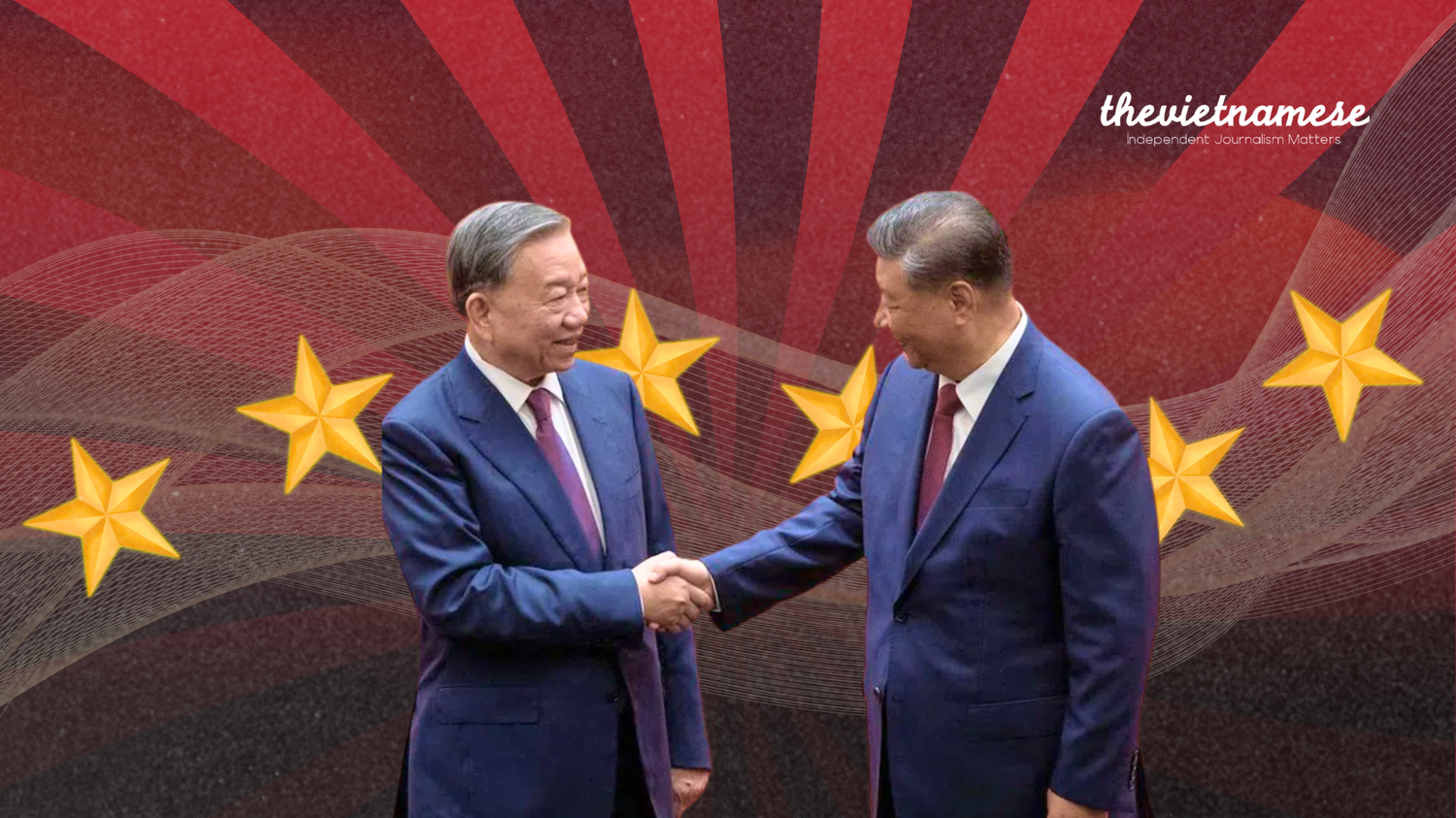
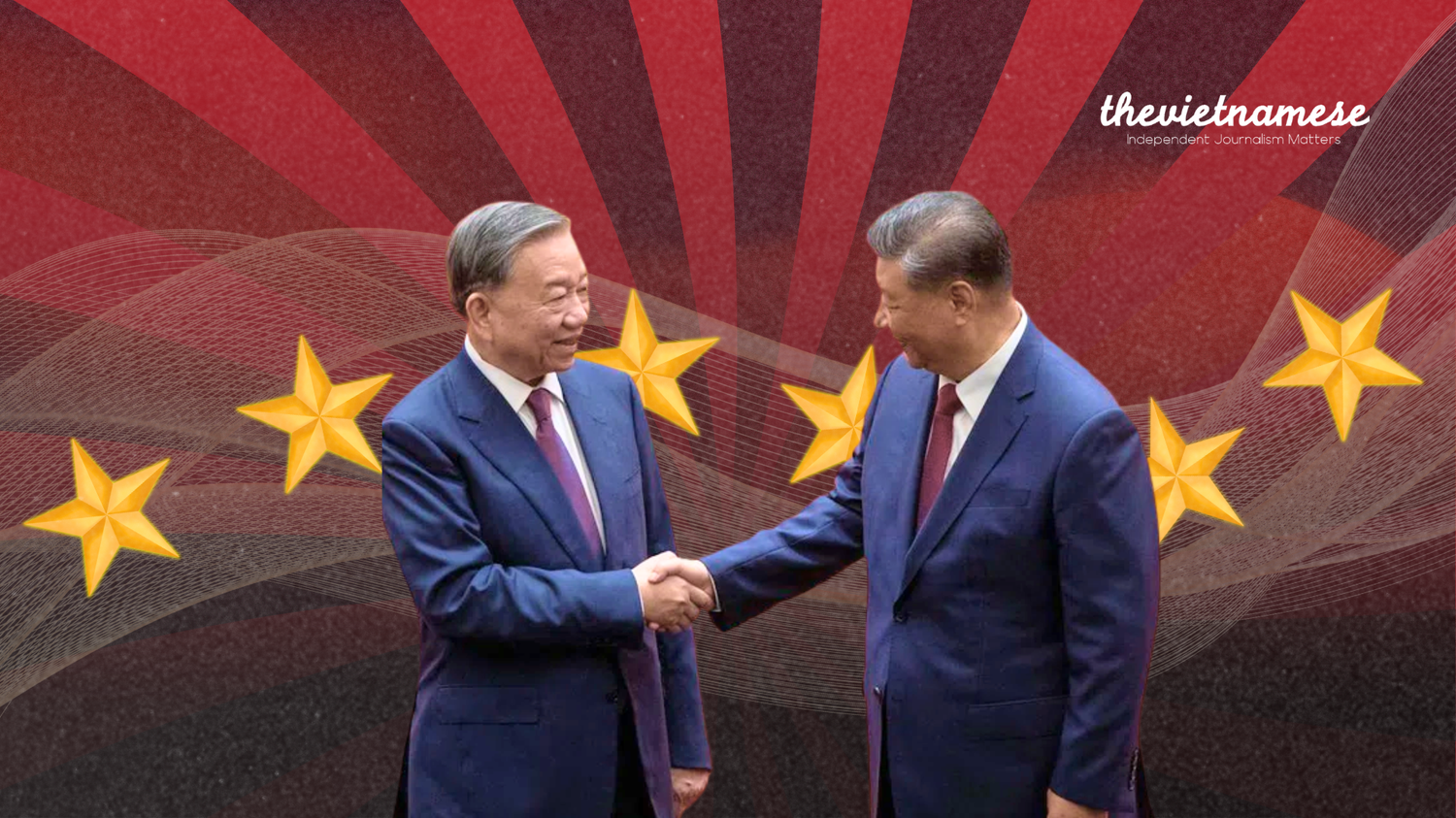
That situational explanation is now being tested. Immediately following the 15th Central Committee Plenum, Bloomberg cited internal sources claiming that Tô Lâm has been nominated for both positions in the upcoming term. [2] This has sparked immediate speculation that Việt Nam may be shifting toward a power “unification” model similar to China’s.
However, viewing this matter through the lens of historical context and the Communist Party of Việt Nam’s core organizational principles suggests otherwise. The likelihood of formally institutionalizing the unification of the general secretary and president roles remains quite limited.
Hồ Chí Minh and Mao Zedong
Before the deaths of Hồ Chí Minh and Mao Zedong, Việt Nam and China operated under similar political power structures. The apex of power in both systems was the party chairman, a position held by both leaders until the end of their lives. During this era, the general secretary (or “first secretary” in Việt Nam) ranked subordinate to the chairman. This hierarchy reflected the extraordinary personal authority of the two men, who served as irreplaceable revolutionary symbols.
Following their deaths, however, the two nations diverged in how they organized supreme power.
In Vietnam, the chairmanship remained vacant after 1969. By the Fourth Party Congress in 1976, it was officially removed from the Party Charter. [3] As noted in journalistic research like Huy Đức’s Bên thắng cuộc, former General Secretary Lê Duẩn opposed retaining the role, arguing that only Hồ Chí Minh possessed the requisite political stature.
China, conversely, retained the chairmanship longer. The position was not officially abolished until 1982, under Deng Xiaoping’s institutional reforms designed to prevent the excessive concentration of power that characterized the Cultural Revolution. With this shift, Việt Nam and China embarked on two distinct institutional trajectories.
China’s “Trinity of Power” and the Core Leadership Model
In contemporary China, supreme power is defined by three roles: general secretary of the Communist Party, president, and chairman of the Central Military Commission. In 1993, Jiang Zemin became the first individual to hold all three simultaneously, establishing the precedent for this “trinity of power.” [4]
Many political studies view this consolidation as a strategic necessity. By concentrating authority in a single figure, the Party ensured leadership coherence during the fragile post-Deng Xiaoping era of generational transition. [5] This arrangement aligned the party leader with the international diplomatic protocols of a head of state while simultaneously reinforcing absolute party control over the military.
This structural concentration eventually evolved into the concept of “core leadership.” While Deng Xiaoping originally coined the term to legitimize the authority of successive leadership generations, it was Xi Jinping who fully institutionalized it. [6] Following his designation as the “core of the Party Central Committee” at the Sixth Plenum of the 18th Central Committee in 2016, the concept—along with “Xi Jinping Thought”—was enshrined in the Party Charter at the 19th Party Congress in 2017.
Việt Nam and the Principle of “Collective Leadership, Individual Responsibility”
While China has moved toward a “core” leader, Việt Nam has maintained an organizational model rooted in the Soviet tradition of “democratic centralism.” This is operationally defined by the maxim “collective leadership, individual responsibility”—a concept deeply associated with Hồ Chí Minh Thought. [7] Under this system, major policies must be debated collectively to prevent individual bias and error, while specific tasks are assigned to individuals to ensure accountability.
This principle is embodied in the leadership mechanism known as the “four pillars,” or more recently, the “five pillars.” This collective includes the nation’s top leaders: the general secretary, the president, the prime minister, the chairperson of the National Assembly, and the permanent member of the Party Secretariat.
Unlike the centralized “core leadership” model found in China, Việt Nam’s arrangement is relatively decentralized. This structure is designed to mitigate the risk of autocracy by establishing internal checks and balances during the policymaking process.
Why Unification is Unlikely in Việt Nam
Two primary factors explain the unlikely adoption of the unification model in Vietnam.
First, merging the general secretary and president roles would demand a fundamental restructuring of the political culture and power structure. It would require more than a simple personnel adjustment; it would necessitate a redefinition of the system’s core operating principle: collective leadership. In pursuing these changes, the Party’s existing internal checks and balances would likely act as significant obstacles to such a shift.
Second, experience demonstrates that holding concurrent titles is not required for Việt Nam to achieve international recognition. A prime example is former General Secretary Nguyễn Phú Trọng’s 2015 visit to the United States. Despite lacking the presidential title, he was received at the White House with full head-of-state protocols.
This confirms that international partners have accepted Việt Nam’s unique power structure. Furthermore, recent diplomatic activities prove that the general secretary already possesses sufficient prestige to represent the nation in strategic commitments without the presidency.
In conclusion, while a general secretary has previously held the presidency, his appointment was a situational solution, not a sign of long-term transformation. Given Việt Nam’s political history and its commitment to decentralized power, the likelihood of institutionalizing the Chinese-style unification model remains low for the foreseeable future.
Mạn Diệp wrote this article in Vietnamese and published it in Luật Khoa Magazine on Jan. 14, 2026. Đàm Vĩnh Hằng translated it into English for The Vietnamese Magazine.
References:
1. VietNamNet News. (n.d.). Tổng bí thư làm Chủ tịch nước: Không phải vì nhất thể hoá, đây là tình huống. VietNamNet News. https://vietnamnet.vn/tong-bi-thu-lam-chu-tich-nuoc-khong-phai-vi-nhat-the-hoa-day-la-tinh-huong-481920.html
2. Trịnh Hữu Long. (2025, December 24). Bloomberg: Tô Lâm được đề cử làm tổng bí thư kiêm chủ tịch nước. Luật Khoa tạp chí. https://luatkhoa.com/2025/12/bloomberg-to-lam-duoc-de-cu-lam-tong-bi-thu-kiem-chu-tich-nuoc/
3. Kiện, T. L.-. V. (2018, April 21). Điều lệ Đảng (do Đại hội đại biểu toàn quốc lần thứ IV thông qua). tulieuvankien.dangcongsan.vn. https://tulieuvankien.dangcongsan.vn/van-kien-tu-lieu-ve-dang/dieu-le-dang/dieu-le-dang-do-dai-hoi-dai-bieu-toan-quoc-lan-thu-iv-thong-qua-3434
4. TimesMachine: Sunday March 28, 1993 – NYTimes.com. (1993, March 28). TimesMachine. https://timesmachine.nytimes.com/timesmachine/1993/03/28/issue.html
5. Shambaugh, D. (2001). THE DYNAMICS OF ELITE POLITICS DURING THE JIANG ERA. In THE CHINA JOURNAL: Vol. NO. 45. https://www.brookings.edu/wp-content/uploads/2016/06/2001chinajournal.pdf
6. Trung, M. (2016, October 28). “Lãnh đạo hạt nhân” của Đảng Cộng sản Trung Quốc là gì? TUOI TRE ONLINE. https://tuoitre.vn/lanh-dao-hat-nhan-cua-dang-cong-san-trung-quoc-la-gi-1209154.htm
7. Tạp chí cộng sản. (n.d.). Tạp Chí Cộng Sản. https://www.tapchicongsan.org.vn/web/guest/chinh-tri-xay-dung-dang/-/2018/825023/view_content