
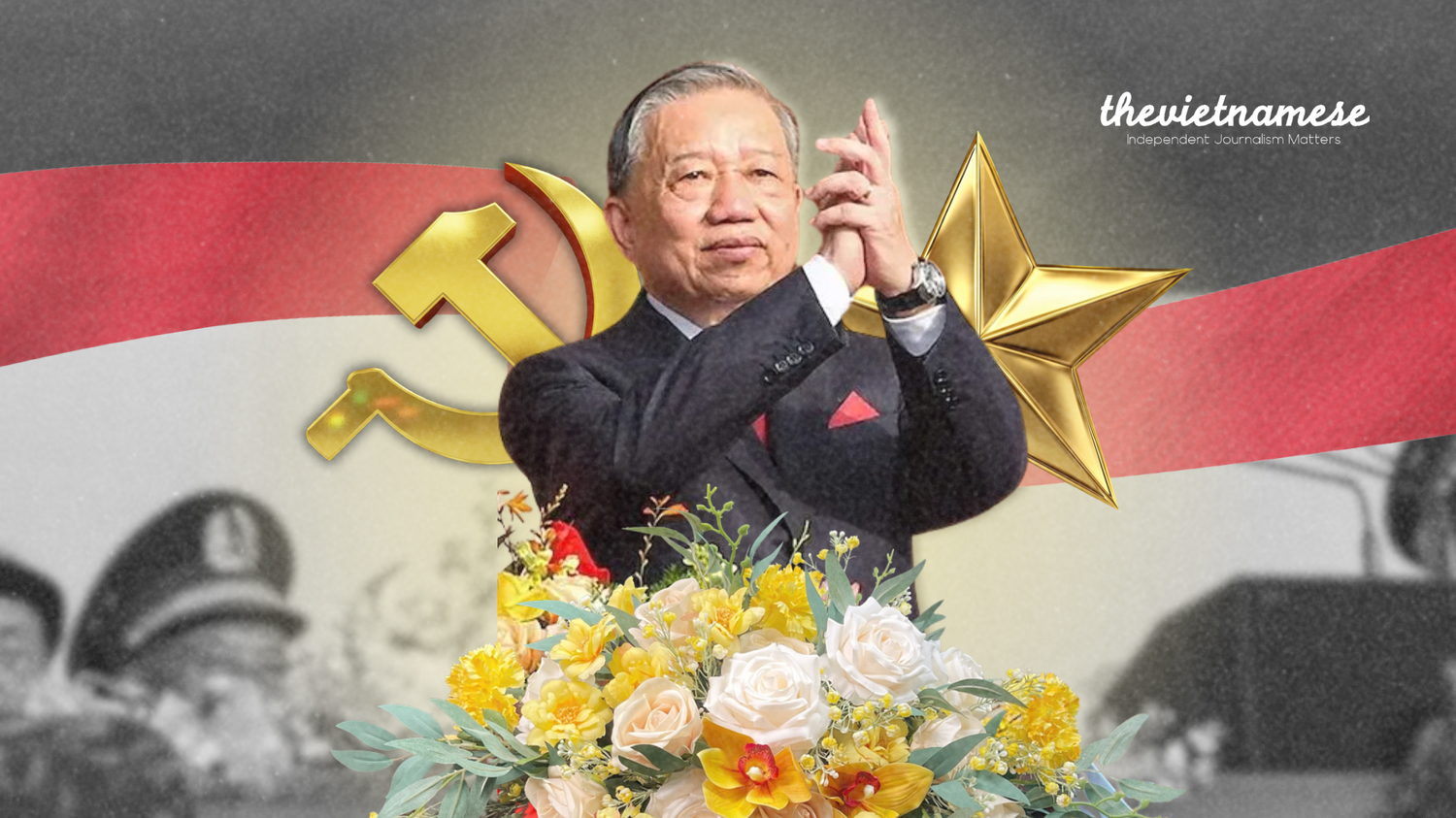
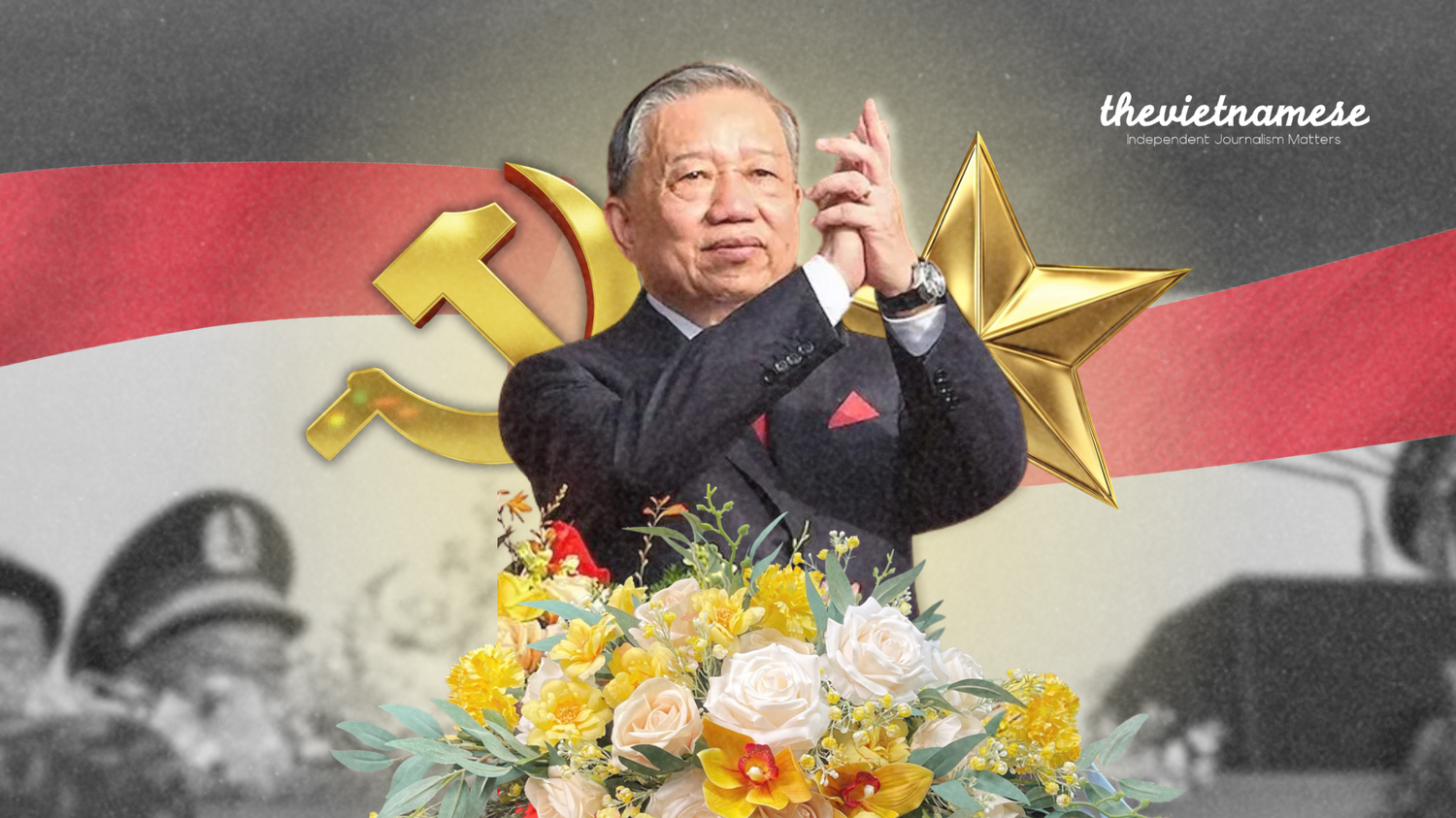
Merging the positions of General Secretary and State President would represent a reform choice aimed at increasing coherence and efficiency in governing Việt Nam. However, concentrating power does not necessarily guarantee good governance for a country. It carries risks of power degeneration, problematic precedents, and the weakening of internal oversight mechanisms.
Such a merger is only viable if treated as a temporary solution subject to strict supervision, ensuring it does not erode the principle of power differentiation within the political system.
While the acceleration of personnel work ahead of the 14th Party Congress has drawn attention, a report published by Bloomberg on Dec. 23, 2025—hours after the 15th Central Committee Plenum concluded—was even more notable. [1]
According to the outlet, the Central Committee has nominated incumbent General Secretary Tô Lâm to simultaneously hold the presidency for the next term. If approved by the Party Congress, this would mark a watershed moment in the consolidation of power at the highest level of Việt Nam’s political system.
Although this information has not been officially confirmed, and Bloomberg cautioned that the proposal could face challenges, the report suggests the Party leadership is considering a strategic, long-term restructuring of its power apex. [2]
Can Unification Lead to Reform?
The proposal to unify the two most powerful positions is not without foundation; it reflects an urgent demand for consistency and speed in governance as Việt Nam’s strategic environment becomes increasingly complex.
As General Secretary Tô Lâm emphasized in September 2025: “Every ministry, sector, locality, unit, cadre, and Party member must immediately get down to concrete tasks, with the spirit of matching words with actions, not putting off today’s work until tomorrow.” [3]
Việt Nam currently faces simultaneous domestic and external pressures, from escalating U.S.–China competition and global supply chain restructuring to the demand for economic reform.
Regional instability—including the situation in Myanmar, tensions in the South China Sea, and the Thailand–Cambodia border conflict—further complicates the landscape. In this context, maintaining parallel centers of power (party and state) has at times created gaps in policy messaging and slowed decision-making.
In theory, unification would lower the costs of coordination, make strategies more consistent, and give leaders more power to act quickly in emergencies. It would also simplify foreign relations, enabling international partners to engage with a single leader who possesses both symbolic status and substantive decision-making authority.
This model already exists in various socialist systems and has appeared recently in Việt Nam when late General Secretary Nguyễn Phú Trọng held both positions during the 12th and early 13th terms. [4] Viewed in this light, the current proposal is an institutional experiment designed to adapt the political system to an era of uncertainty.
Does Concentrated Power Equate to Effectiveness?
Governance effectiveness depends not solely on the concentration of power but also on how it is controlled. For years, Việt Nam has operated on the principle of collective leadership, where the separation of the General Secretary and State President acts as a mechanism of power balancing.
Unification, therefore, risks undermining this balance. If the party and state power converge in a single individual without stronger oversight, institutions like the Politburo and National Assembly risk slipping into formalistic consensus under the weight of an overpowering voice.
This concentration brings a high risk of power degeneration. As Tạp chí Cộng sản (the Communist Review) warned in September 2015, “power cannot be entrusted to anyone without control.
It can have both positive and negative effects. It can turn a person who is not yet evil into a bad one, turning the wielder into its slave.” [5] When a single politician holds both top titles, the immense power accumulation increases the danger of such degeneration.
Furthermore, justifying this model based on short-term efficiency ignores long-term risks. A system without counterweights loses its capacity for self-correction. Without clear constitutional provisions for dual office-holding, this move creates an institutional gray zone, raising the question of whether this model will become the “new normal” after Tô Lâm.
A centralized power model is sustainable only if paired with clear internal oversight, a substantive role for collective institutions, and a firm commitment that this is a temporary solution rather than a permanent erosion of power differentiation within the Party and the State.
***
Ultimately, the unification issue is a strategic stress test of the Vietnamese political system’s capacity for self-adjustment during a transition of high uncertainty. However, the need for stability does not mean merging these positions should be institutionalized.
Domestic and international observers are right to question whether the political system is truly so constrained that it struggles to select a separate State President. Is the country really facing a situation where “talent is as scarce as autumn leaves”?
If this unification is a controlled reform step accompanied by strengthened balancing mechanisms, it could enhance short-term strategic flexibility. However, if it is treated as a “natural” panacea for governance challenges, it risks amplifying the very dangers of power concentration that the system has long sought to avoid.
Nhất Thể wrote this article in Vietnamese and published it in Luật Khoa Magazine on Dec. 25, 2025. Đàm Vĩnh Hằng translated it into English for The Vietnamese Magazine.
References:
- Stevens, F. (2025, December 23). Vietnam’s Communist Party Said to Back Lam to Remain Chief. Bloomberg. https://www.bloomberg.com/news/articles/2025-12-23/vietnam-s-communist-party-said-to-back-lam-to-remain-as-chief?embedded-checkout=true
- See [1].
- Phong, T. (2025, December 24). Tổng Bí thư Tô Lâm: Nói đi đôi với làm, việc hôm nay không để ngày mai. Tiền Phong. https://tienphong.vn/tong-bi-thu-to-lam-noi-di-doi-voi-lam-viec-hom-nay-khong-de-ngay-mai-post1778626.tpo
- Tiến Long, V. S. (2021, January 31). Ông Nguyễn Phú Trọng tái đắc cử Tổng bí thư. Tuổi Trẻ. https://tuoitre.vn/ong-nguyen-phu-trong-tai-dac-cu-tong-bi-thu-20210131114338486.htm
- Hoàng, V. N. (2015, September 15). Tham vọng quyền lực và sự tha hóa. Tạp chí Cộng sản. https://www.tapchicongsan.org.vn/web/guest/sinh-hoat-tu-tuong/-/2018/35208/tham-vong-quyen-luc-va-su-tha-hoa.aspx