
Germany’s trade deficit with China is on track to hit a record high in 2025 amid shrinking demand for German goods – a trend that appears unlikely to be reversed in the short term and which could trigger a protectionist backlash, according to analysts.
China, already Germany’s biggest import partner, is set to increase its total exports to Germany by 7.2 per cent, with the value reaching €168 billion (US$197 billion), according to a forecast last week by Germany Trade and Invest (GTAI), an economic development agency. Meanwhile, Germany’s exports to China are expected to decline by 10 per cent to €81 billion, widening the trade deficit to €87 billion.
Reversing the slide will be difficult in the short term, according to Holger Goerg, director of the international trade and investment research group at the Kiel Institute for the World Economy.
Advertisement
At the heart of the issue is eroding competitiveness. Germany’s vaunted automotive industry is set to see its global exports decline by 3.2 per cent this year, according to the GTAI report. And it noted that Chinese makers of electric vehicles are aggressively challenging legacy German brands not only domestically but across emerging Asian markets.
Germany’s auto exports to China declined by roughly 5 per cent, year on year, during the first seven months of 2025, a Deutsche Bank report said in October, identifying the slump as a key driver of the widening trade gap.
Advertisement
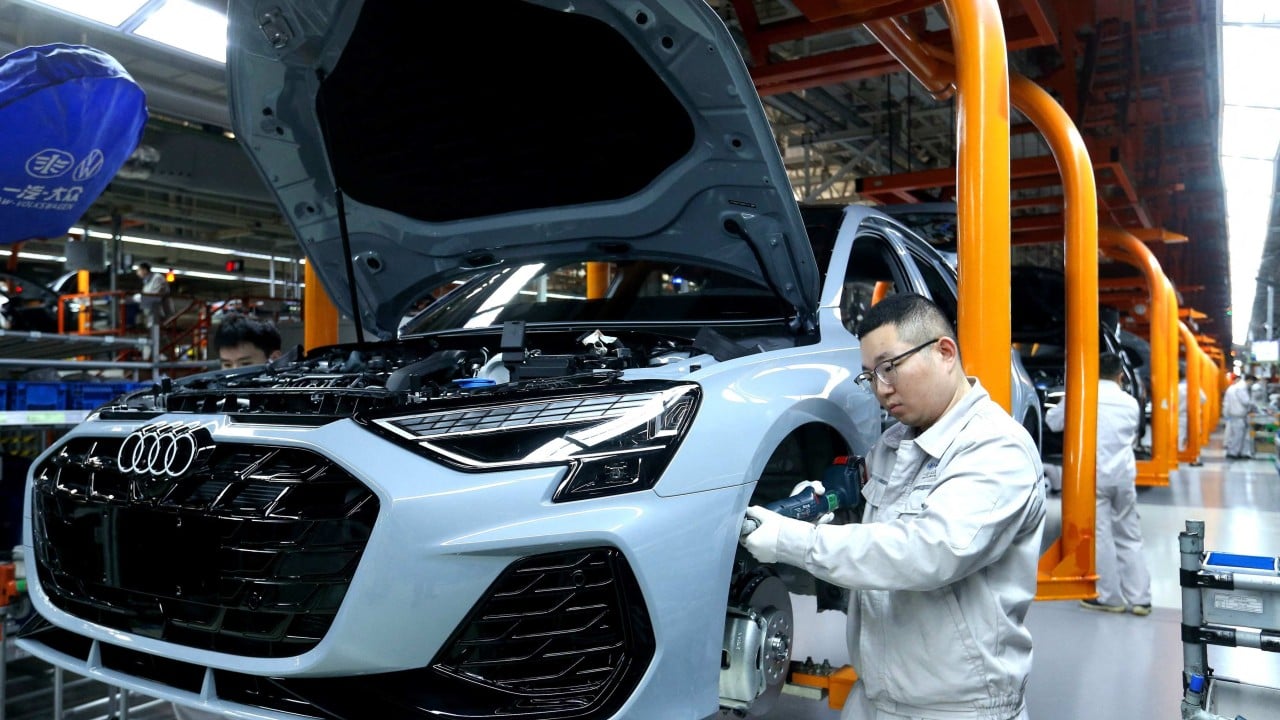
Adding to the imbalance, giants such as Volkswagen are increasingly localising production under a mantra of “in China, for China”. This strategy, encouraged by Beijing, substitutes German exports with locally made goods.
Goerg noted that German foreign direct investment in China is now driven largely by reinvested earnings rather than new capital, as established players expand local operations.