
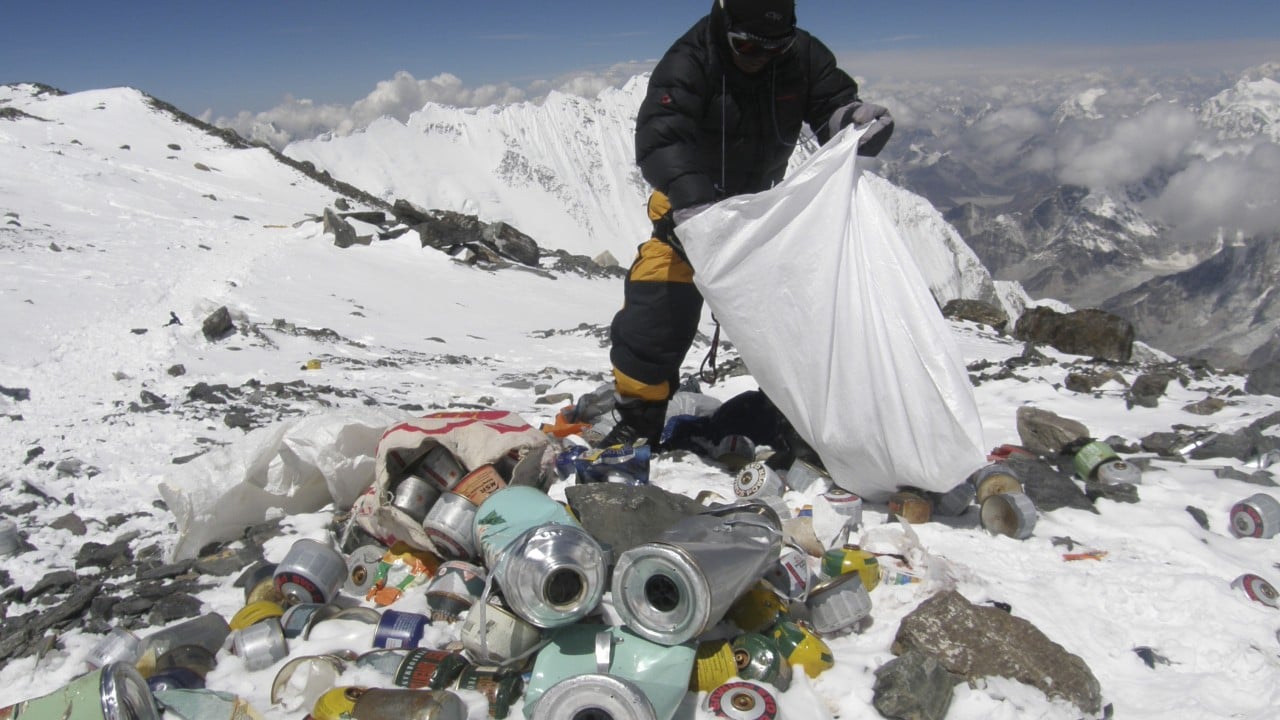
For years, Nepal’s government has faced pressure to reduce rubbish in the Himalayas, where decades of commercial mountaineering have left large amounts of discarded gear, human waste and other debris on some of the world’s tallest peaks.
Last week, the authorities in Kathmandu finally took firm action. They approved a landmark five-year plan to clean up Nepal’s mountains, seeking to curb waste through stricter monitoring and limiting the number of climbers on Mount Everest, the world’s highest peak.
“There was an absence of a unified document that clearly defined the responsibilities of several stakeholders who are involved and how to tackle the problem,” said Jayanarayan Acharya, spokesman of the Ministry of Culture, Tourism and Civil Aviation, tasked with implementing the plan.
Advertisement
“This action plan addresses those issues and will help make waste management in the mountains more effective.”
Since Nepal’s Tenzing Norgay Sherpa and New Zealander Sir Edmund Hillary first climbed Mount Everest in 1953, there have been more than 13,000 successful climbs to its peak. The mountain’s popularity has created human traffic jams and a growing garbage problem, raising alarms about the long-term health of the Himalayas.
Advertisement
The waste issue drew worldwide attention after Japanese climber Ken Noguchi organised the first major clean-up campaign in the Everest region between 2000 and 2007, with his team removing about 9,000kg (19,800 pounds) of waste.