
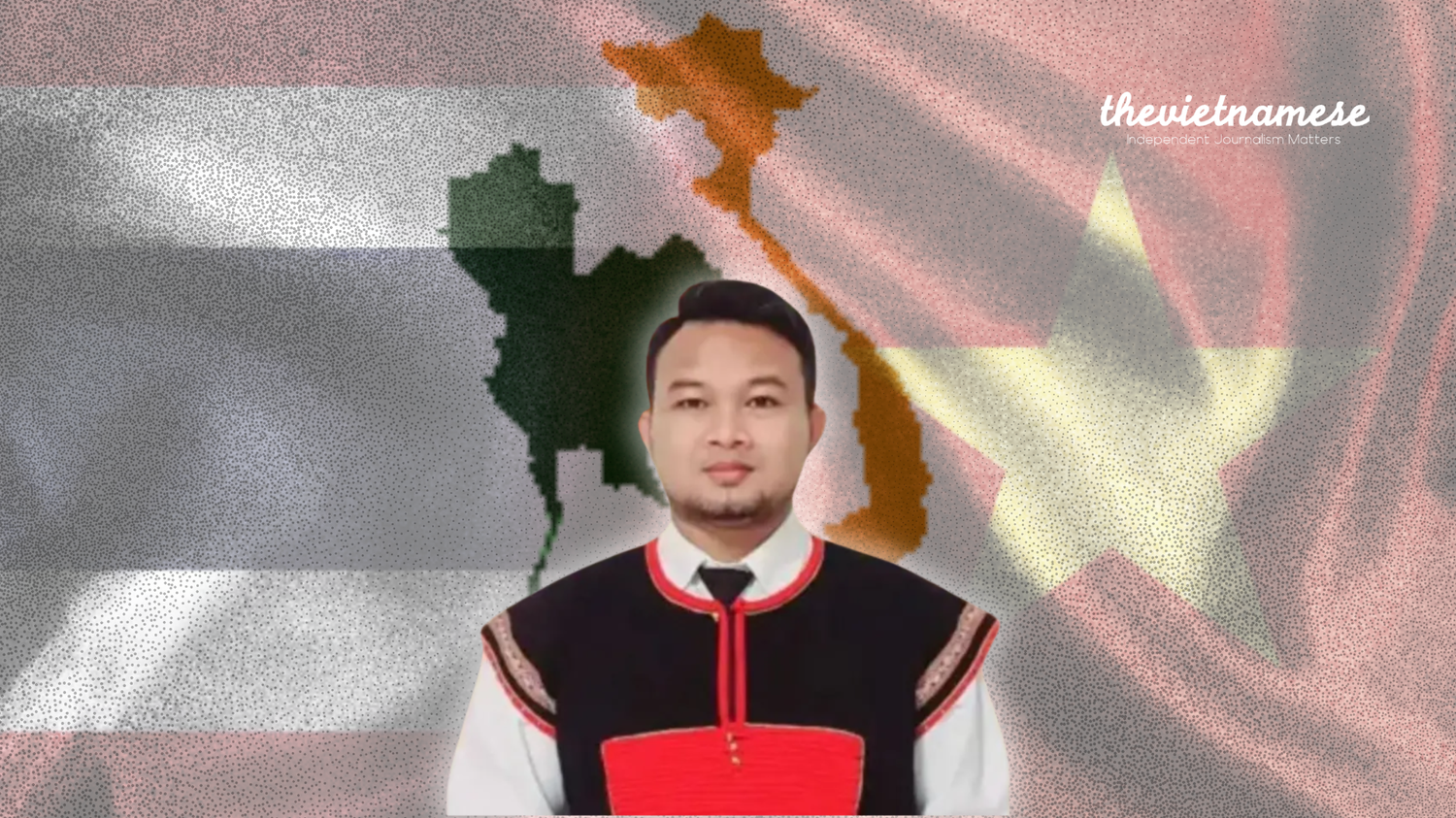
On Nov. 26, a Thai court upheld the extradition of Y Quỳnh B’Đắp, essentially allowing the Thai government to proceed with the request from Việt Nam. [1] Just two days later, Thailand announced that the extradition was complete. The initial trial in September was “packed to capacity,” attended by Vietnamese security, journalists, human rights activists, and foreign diplomats. [2]
Official extradition requests to Thailand are unusual for Vietnamese authorities, particularly in this high-profile case that drew international attention. Historically, they have employed different methods. For instance, Trương Duy Nhất was kidnapped in Thailand in 2019 [3], and Đường Văn Thái was abducted in a similar fashion in 2023. [4]
The decision to pursue a formal extradition for Y Quỳnh B’Đắp rather than an abduction suggests a specific strategy. This “operation” served to legitimize the removal of a long-standing opponent while establishing a legal precedent for future extraditions.
A Thorn in the Side
The Vietnamese government’s hostility toward human rights activists—particularly those from ethnic minority backgrounds—explains why Y Quỳnh B’Đắp is viewed as a “thorn in Việt Nam’s side. His history of activism has long been classified as undesirable by the state.
His father, Y Phôn Êban, served three years in prison for his alleged involvement with FULRO and for “inciting the public to protest against the state.” [5] B’Đắp’s own record includes a five-month detention without trial by Đắk Lắk police in 2012 for “undermining the policy of national unity.” By 2013, security authorities accused him of “inciting [the] local people” and forced him into a public “self-criticism” session, making him sign a pledge not to reoffend.
Fleeing to Thailand to escape this pressure, B’Đắp founded Montagnards Stand for Justice (MSFJ) in 2019. Now operating in the United States since 2023, MSFJ has become a structured organization that actively opposes human rights infringements in Việt Nam. [6] The group has consistently submitted reports on domestic violations to the United Nations, often collaborating with other international organizations. [7]
While the Vietnamese government has historically ignored activists once they move abroad, B’Đắp’s case is different. Because his organization provides a platform for direct criticism from affected communities, his return to custody became a primary objective for the state.
Clearing the Path to Create Precedent
The strategy used for Y Quỳnh B’Đắp marks a shift from the abductions of Trương Duy Nhất, Đường Văn Thái, and Trịnh Xuân Thanh. In those previous instances, authorities opted to kidnap individuals to bring them to trial in Việt Nam. However, in B’Đắp’s case—and similarly with Lê Trung Khoa—the authorities have adopted a more calculated approach: securing a conviction in absentia before formally requesting extradition. [8]
Securing a prior conviction offers strategic advantages. During the mobile trial regarding the attacks on government offices in the Ea Tiêu and Ea Ktur communes of Đắk Lắk, B’Đắp was tried alongside 99 other defendants. [9] This mass trial, which included individuals caught at the scene, was used to lend the verdict against B’Đắp an air of “credibility.”
The compressed nature of the proceedings—sentencing 100 people in just five days—allowed the authorities to obscure details and more easily attach charges to B’Đắp. [10] A separate trial would likely have invited more scrutiny and exposed evidentiary gaps, particularly regarding the claim that B’Đắp was the mastermind “behind” the accused terrorist group. [11]
Confidence in Negotiating with Thailand
Việt Nam’s confidence in its negotiations with Thailand stems from a history of mutual assistance in suppressing political dissidents. For instance, in early 2019, Việt Nam assisted in the arrest of Thai dissidents Chucheep Chivasut, Siam Theerawut, and Kritsana Thapthai. [12] Charged with lèse-majesté for their activism, the trio had fled to Laos and then entered Việt Nam with false documents. On May 8, 2019, after arresting them for illegal entry, Vietnamese authorities quietly returned them to Thailand.
While it is unclear if these arrests were explicitly requested by Thailand, the incident likely paved the way for the later abductions of Trương Duy Nhất and Đường Văn Thái on Thai soil. Unlike Germany, which reacted to the 2017 abduction of Trịnh Xuân Thanh by suspending its strategic partnership and expelling diplomats [13], Thailand has stronger incentives to cooperate. Bangkok is equally eager to target its own activists living in exile throughout Cambodia, Laos, and Việt Nam.
This alignment of interests was evident in the Thai court’s handling of the B’Đắp case. By dismissing Article 9 of the Extradition Act and concluding that there was “insufficient evidence” of a risk of torture or disappearance, the court demonstrated that Bangkok was aligned with Hà Nội’s objectives from the beginning. [14]
Việt Nam and Thailand are moving toward a formal bilateral extradition agreement, a process that has seen cooperation tighten since early 2024. [15] This shift is especially evident in the treatment of Montagnard refugees.
On March 13, 2024, a Vietnamese security delegation visited a refugee settlement in Nonthaburi Province to track Y Quỳnh B’Đắp. [16] To lure refugees back to Việt Nam, they used incentives—such as leniency, land, and vehicles—but also levied threats. According to a witness who spoke with RFA, they warned: “If you don’t come back with us now, when the police later catch you, there will be no forgiveness.”
The extradition of B’Đắp serves as a warning to the refugee community. Since being handed over to Việt Nam, he has essentially disappeared into the system; his location and health remain undisclosed, and he has had no contact with family or legal counsel. [17]
As the first Vietnamese activist formally extradited from Thailand, B’Đắp’s case serves as a “test case” to normalize extradition over the previous practice of abduction. It allows both nations to refine their cooperation in political cases while monitoring the international community’s response.
This trajectory is supported by broader regional shifts, including Thailand’s approval of the draft ASEAN Extradition Treaty and Việt Nam’s passage of a new Extradition Law in late 2025. [18] [19] These milestones suggest that formal extradition will become the primary tool for targeting Montagnard refugees and human rights activists across borders.
Thanh Anh wrote this article in Vietnamese and published it in Luật Khoa Magazine on Dec. 11, 2025. Đàm Vĩnh Hằng translated it into English for The Vietnamese Magazine.
- The Vietnamese. (2025, December). Thailand quietly hands refugee Y Quỳnh B’Đắp over to Việt Nam despite legal petitions. https://www.thevietnamese.org/2025/12/thailand-quietly-hands-refugee-y-quynh-bdap-over-to-viet-nam-despite-legal-petitions/
- BBC News Tiếng Việt. (2024, September 30). Vì sao phiên tòa ở Bangkok xét xử vụ dẫn độ Y Quynh Bđăp về Việt Nam đông nghịt người? https://www.bbc.com/vietnamese/articles/cn4zglxz0p7o
- Hằng, M. (2020, August 13). Vụ Trương Duy Nhất và nạn bắt cóc nhà hoạt động ở Đông Nam Á. BBC News Tiếng Việt. https://www.bbc.com/vietnamese/vietnam-53747393
- Rfa. (2024, December 23). Theo dõi Nhân quyền: Bắt cóc và xét xử Đường Văn Thái là hành vi côn đồ, coi thường luật quốc tế! Tiếng Việt. https://www.rfa.org/vietnamese/news/hrw-says-abduction-and-conviction-of-blogger-duong-van-thai-thuggish-acts-not-respecting-international-laws-10312024035840.html
- ThàNh, V. (2023, May 26). Y Quynh Bdăp, kẻ phá hoại buôn làng ở Tây Nguyên – Báo Công an Nhân dân điện tử. Báo Công an Nhân Dân Điện Tử. https://cand.com.vn/Ban-tin-113/y-quynh-bdap-ke-pha-hoai-buon-lang-o-tay-nguyen-i694805/
- See: https://msfjustice.org/
- See: https://tbinternet.ohchr.org/_layouts/15/TreatyBodyExternal/DownloadDraft.aspx?key=sGCHPnCRXXrDdTJtHV8enyyGhe1HcT+zRSS9SnYMkGvCu6yh4AX6NM0llWsCDp30
- The Vietnamese. (2025, December). As extradition law advances, police seek Lê Trung Khoa and Nguyễn Văn Đài — both say they will continue their work. https://www.thevietnamese.org/2025/12/as-extradition-law-advances-police-seek-le-trung-khoa-and-nguyen-van-dai-both-say-they-will-continue-their-work/
- Trần Quỳnh Vi. (2025, June 25). Luật Khoa 360: Y Quynh Bđăp, tội danh khủng bố và phiên tòa dẫn độ. Luật Khoa Tạp Chí. https://luatkhoa.com/2024/10/luat-khoa-360-y-quynh-bdap-toi-danh-khung-bo-va-phien-toa-dan-do/
- Nhật M. (2025, July 29). Quyền của bị cáo trong xét xử lưu động. Luật Khoa Tạp Chí. https://luatkhoa.com/2023/08/quyen-cua-bi-cao-trong-xet-xu-luu-dong/
- Hằng, T. P. M. (2024, August 29). Y Quynh Bđăp – Kẻ đứng sau vụ khủng bố 11/6/2023. BAO DIEN TU VTV. https://vtv.vn/phap-luat/y-quynh-bdap-ke-dung-sau-vu-khung-bo-11-6-2023-20240829211716006.htm
- Thailand: Critics feared ‘Disappeared.’ (2022, October 27). Human Rights Watch. https://www.hrw.org/news/2019/05/09/thailand-critics-feared-disappeared
- Trần Hà Linh. (2025, July 12). Đức tái khẳng định Trịnh Xuân Thanh bị bắt cóc tại Berlin. Luật Khoa Tạp Chí. https://luatkhoa.com/2019/02/duc-tai-khang-dinh-trinh-xuan-thanh-bi-bat-coc-tai-berlin/
- BBC News Tiếng Việt. (2025, November 29). Chính phủ Thái bị tố thỏa hiệp với Việt Nam khi tòa phê chuẩn dẫn độ ông Y Quynh Bđắp. https://www.bbc.com/vietnamese/articles/clyd4l4zw3go
- Việt, V. T. (2024, August 15). LHQ đề nghị Việt Nam, Thái Lan giải trình về việc hai nước hợp tác dẫn độ người Thượng tị nạn. Voice of America. https://www.voatiengviet.com/a/lhq-de-nghi-viet-nam-thai-lan-giai-trinh-ve-viec-hai-nuoc-hop-tac-dan-do-nguoi-thuong-ti-nan/7743434.html
- RFA. (2024, December 23). An ninh Việt Nam sang tới Thái Lan để truy tìm người Thượng tị nạn. Tiếng Việt. https://www.rfa.org/vietnamese/news/vietnamese-security-officers-chase-montagnard-refugees-in-thailand-03152024055011.html
- Hoàng Nam. (2025, December 9). Vụ dẫn độ Y Quỳnh B’đăp: Việt Nam im lặng về nơi giam giữ. Luật Khoa Tạp Chí. https://luatkhoa.com/2025/12/vu-dan-do-y-quynh-bdap-viet-nam-im-lang-ve-noi-giam-giu/
- Sinh, Đ. (2025, November 4). Thái Lan phê duyệt dự thảo Hiệp định ASEAN về dẫn độ. Vietnam+ (VietnamPlus). https://www.vietnamplus.vn/thai-lan-phe-duyet-du-thao-hiep-dinh-asean-ve-dan-do-post1074956.vnp
- The Vietnamese. (2025, December). As extradition law advances, police seek Lê Trung Khoa and Nguyễn Văn Đài — both say they will continue their work. https://www.thevietnamese.org/2025/12/as-extradition-law-advances-police-seek-le-trung-khoa-and-nguyen-van-dai-both-say-they-will-continue-their-work/