

The need for a flexible mindset, long-term investment and cooperation between Asian nations as the world embraces more sustainable ways to produce, distribute and consume energy were the key action points from top-level discussions involving policymakers and industry leaders.
The three-day Energy Asia 2025 forum in Kuala Lumpur, Malaysia, hosted by the Malaysian energy company, Petronas, examined how Asia can meet its soaring energy needs while advancing its climate goals, a difficult balance that will have an impact not only on the region but the rest of the world.
Its conclusions paved the way for Asia’s economies to build on their net-zero plans – where harmful greenhouse gas emissions are balanced by removing the same amount from the atmosphere – until officials reconvene for the forum’s next edition in 2027.
Advertisement
Tengku Muhammad Taufik, president and group CEO of Petronas and chairman of Energy Asia, highlighted Japan’s Green Transformation (GX) policy as an example of this type of approach: a US$1 trillion initiative which frames green transformation as a driver of economic growth.
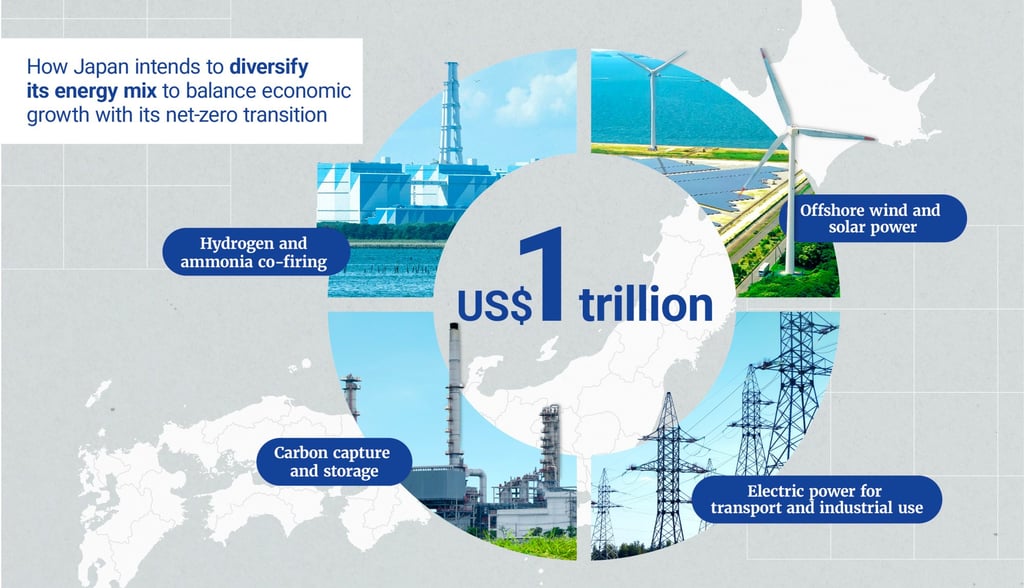
Such a policy addresses a long-standing concern about energy transition – that cutting emissions must come at the cost of growth or jobs – and offers a solution which is both sustainable and economically feasible.
Advertisement
This year’s “World Energy Investment” report, published by the International Energy Agency (IEA), shows Southeast Asia’s investments in lower-carbon energy sources have increased by about 60 per cent since 2015.
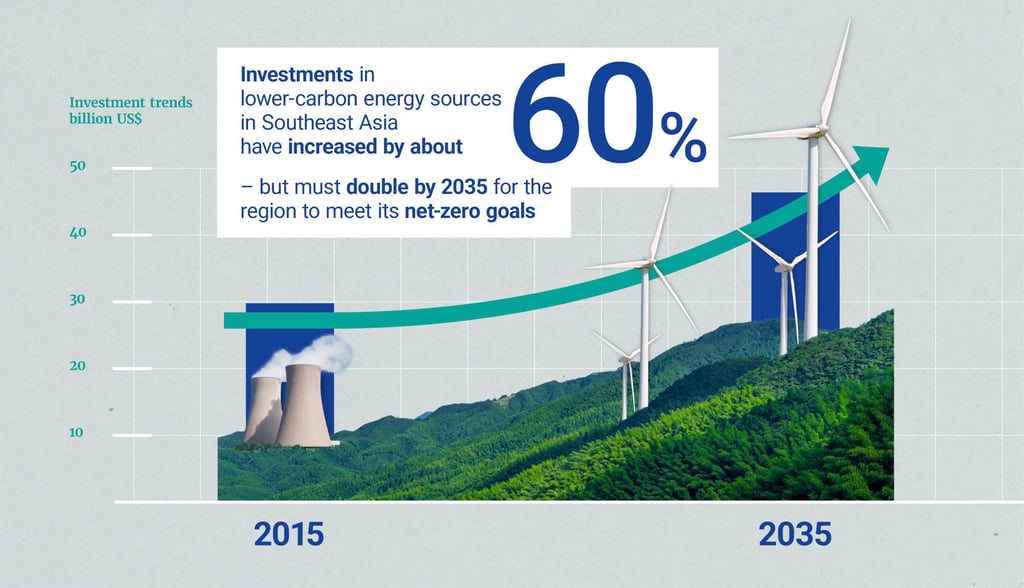
However, this figure will still need to almost double by 2035 to keep the region on track to achieve its net-zero goals, where harmful greenhouse gas emissions are balanced by removing the same amount from the atmosphere. It means there is a clear need for initiatives such as GX, which provide attractive investment opportunities that will help to drive Asia’s green energy transition.
Advertisement
Alongside competitive returns, the forum highlighted that potential investors also need to feel a sense of assurance before they put funding into such projects.
Christine Healy, president and CEO of Canada-based energy provider Northland Power, told a panel discussion titled “Balancing the Energy Mix for the Power Transition”, that predictable regulation – where laws, policies and guidelines were clear, stable and consistently applied – would provide certainty for businesses and individuals, which was essential for attracting long-term capital.
She said the shift in Asia was less of a transition and more of a transformation, and would require bolder policies to open markets, create incentives and attract outside investment.
Advertisement
However, creating the right conditions for investment is only part of the solution. It is also vital to steer capital towards the specific infrastructure and innovations that contribute to the long-term resilience of Asian economies.
The same panel discussion also highlighted the importance of strengthening grid networks to better manage energy supply from renewable sources and in unlocking investment opportunities. It said placing a greater emphasis on both would help balance today’s energy needs with transformative technologies such as fusion and advanced solar.
It also reaffirmed that cross-border cooperation, from policy alignment to infrastructure partnerships, will play a role in supporting the region’s energy transition.
Advertisement
The economies of the Association of Southeast Asian Nations (Asean) have already started to collaborate on various fronts to help drive integration and share progress, with 14 memorandums of understanding (MOUs) signed during Energy Asia 2025.
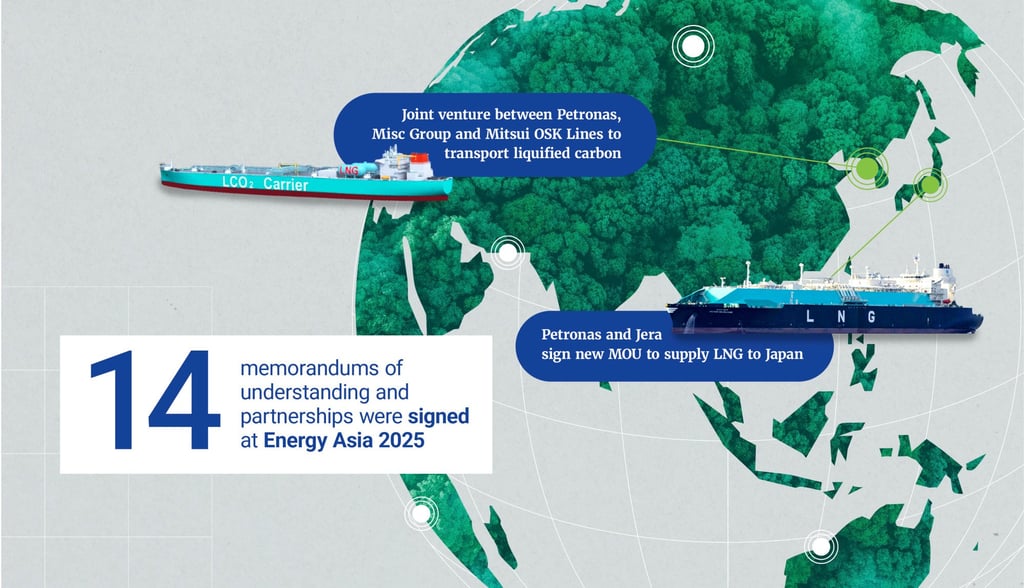
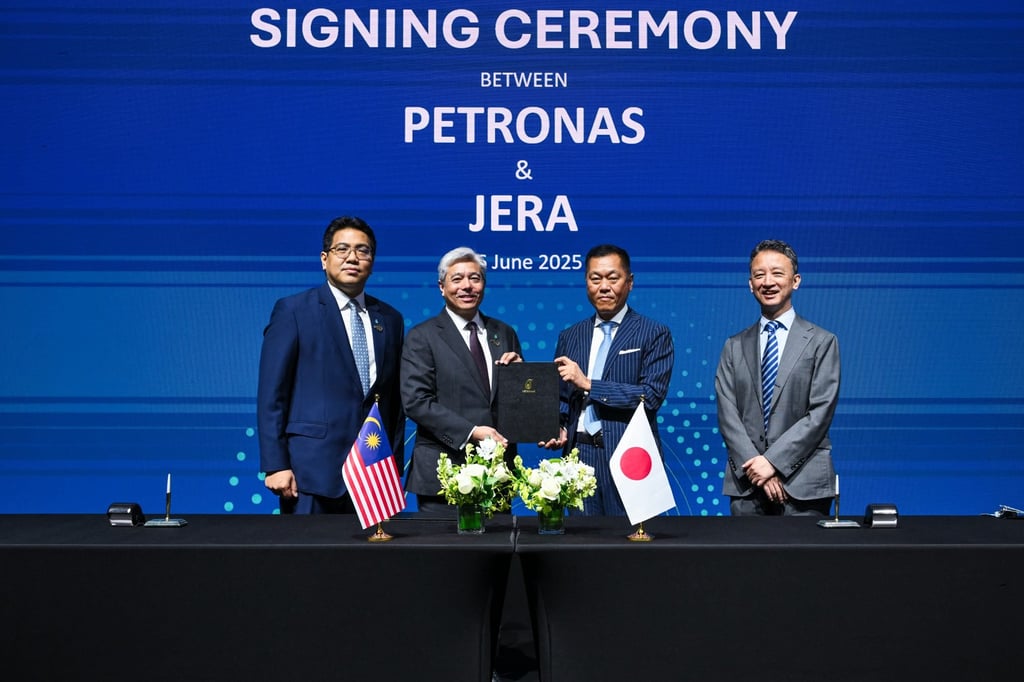
One of these MOUs is for a joint venture between Petronas, Misc Group, a Malaysia-based company that provides maritime services for energy sources, and the Japanese shipping company Mitsui OSK Lines, for transporting liquefied carbon. Petronas also renewed an MOU with Jera, to continue supplying liquefied natural gas (LNG) to the Japan-based energy company.
In addition, Taufik highlighted the benefits of initiatives such as the proposed Vietnam-Malaysia-Singapore regional grid, which could transform the Asean region into the world’s fifth-largest economic bloc while improving energy security and reducing carbon emissions.
Advertisement
In the plenary session “Fueling the Energy Transition Through Partnerships”, Sazali Hamzah, Petronas’ executive vice-president and CEO for downstream, and Mitsuru Izumo, founder and president of the Tokyo-based microbiology company Euglena, which grows microalgae for use in cosmetics and biofuels, discussed their biorefinery venture in Johor, Malaysia.
The partnership will leverage Japanese microalgae biotechnology and Malaysian downstream capabilities to produce sustainable fuels at scale, and aims to reach an annual capacity of 1 million tonnes (1.1 million US tons).
Looking beyond regional collaborations to global interdependence, Daniel Yergin, vice-chairman of S&P Global, and founder of CeraWeek, one of the partners of Energy Asia 2025, mentioned the growing significance of the United States’ exports of LNG to Asia, including the nation’s US$60 billion deal with Japan.
Advertisement
He also highlighted the important role that financial institutions play in both bridging investment gaps and enabling cross-border ventures such as regional power grids and cost-efficient hydrogen “corridors”, or pipeline networks, that transport the fuel.
Energy Asia 2025’s closing ceremony dialogue placed the emphasis on the importance of nations collaborating to deliver successful outcomes.
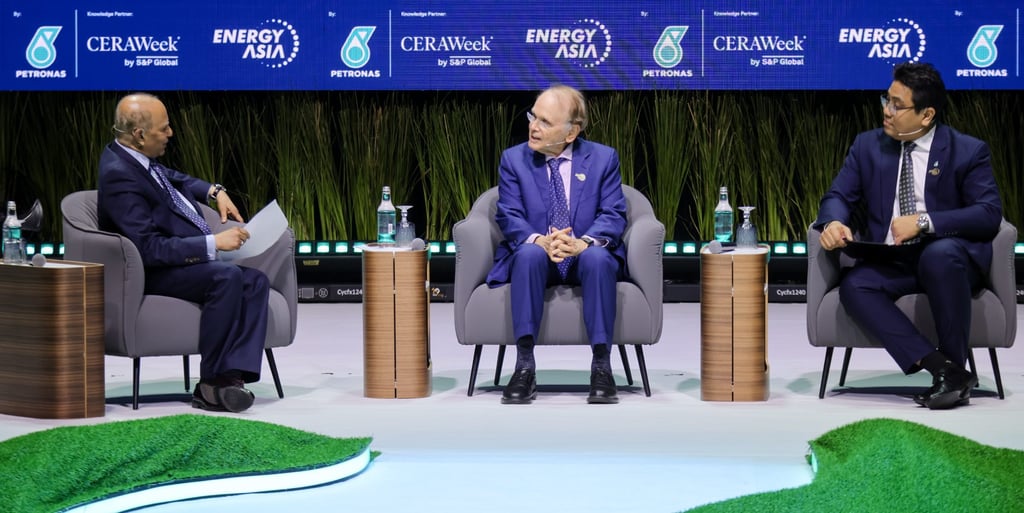
“The perspectives aired over the past three days have successfully highlighted the existing and emerging challenges faced and underscored the imperative to build a resilient energy system,” Taufik said in his closing remarks.
Advertisement
“Asia stands firm in our pragmatic and collaborative approach in shaping a just and equitable energy future for more than half of the global population.”
He reaffirmed Asia’s pragmatic and collaborative plans and emphasised that the partnerships formed during the forum would be able to achieve real outcomes for the region.
The forum, which attracted more than 4,000 delegates from 60 countries, also marked several milestone events, including the launch of the Petronas Energy Transition Academy – which is designed to equip the region’s energy workforce with the skills needed for a low-carbon future.
Advertisement
It also recognised the Blue Carbon Collective, established by Petronas, in collaboration with the Mercedes-AMG Petronas Formula One Team, the University of Sao Paulo and Universiti Putra Malaysia, to advance research into mangrove-based carbon sequestration as a nature-based solution to climate change.
Carbon sequestration is a method of capturing and storing carbon dioxide from the atmosphere to reduce its effects on the earth’s temperature, and mangroves are known to be effective agents in this process.
The third edition of Energy Asia will take place in Kuala Lumpur from June 2 to 4, 2007, where a potential key topic will be on AI’s influence in the energy supply system, among others.
Advertisement
Visit the Energy Asia website for the latest updates of the 2027 forum.
Advertisement