
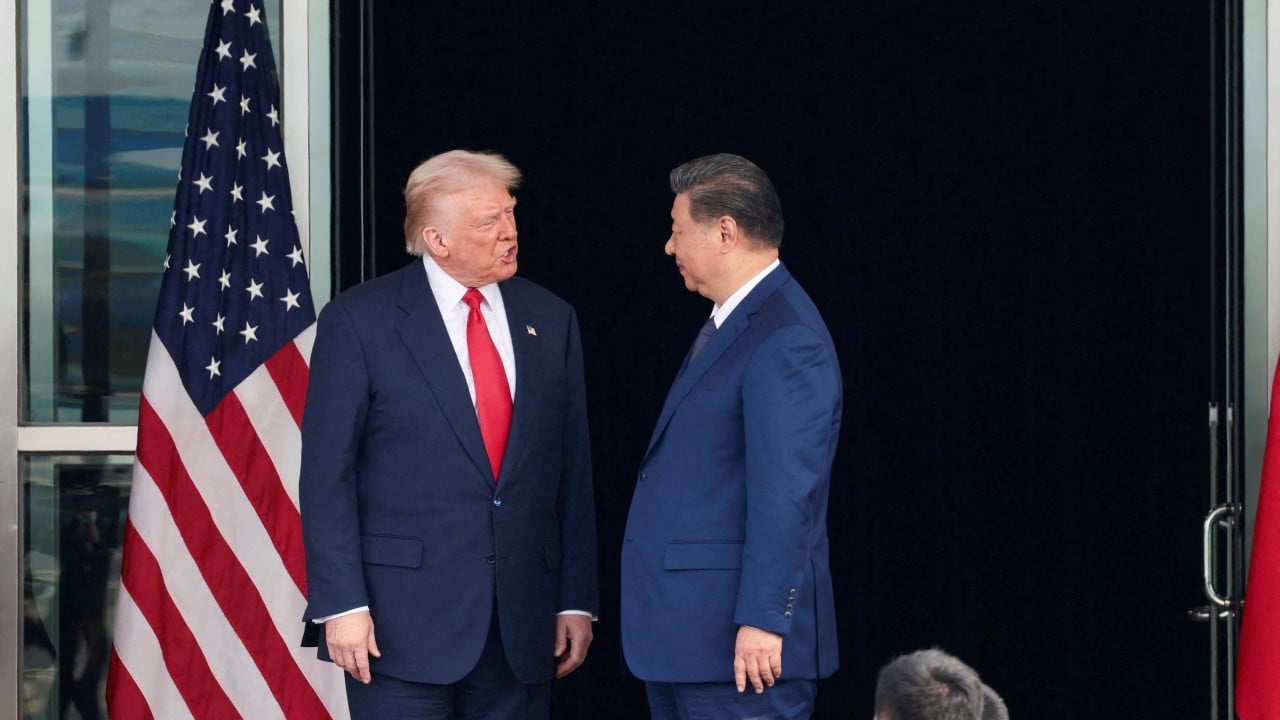
The new US national security strategy says a great deal about how the government imagines its foreign policy in the next few years but tells us just as much about communism and the US president’s view of it.
Donald Trump has long had an unusual relationship with communism, in that he does not seem especially concerned by it. Yes, it’s true he does denounce “communists”, “socialists”, “radicals” and “the far left”, but he is rarely speaking about communist regimes opposed to US interests abroad.
His Republican forebears, like presidents Ronald Reagan and Richard Nixon, had much to say about the communist threat abroad and how its spread threatened US influence, as well as the cause of individual freedom, but Trump speaks fondly of China’s Communist Party leader Xi Jinping.
Advertisement
This does not appear to stem from how the “free world” triumphed over the Soviet Union and any resulting diminishment of the communist threat: in an oft-quoted Playboy magazine interview from 1990, Trump criticised the Soviet Union – for not responding harshly enough to the growing opposition that would eventually culminate in its dissolution.
This he contrasted with Beijing’s 1989 Tiananmen Square crackdown, the brutality of which made the People’s Republic of China an international pariah at the time. It is credited, however, for preserving the Communist Party’s political power and, in Trump’s words, displaying “the power of strength”.
Advertisement
This seeming respect for strong leaders – even those with economic and organisational views anathema to his own – willing to take hardline measures to preserve their authority, remains, given Trump’s support not just for Xi and North Korean leader Kim Jong-un, but also their fellow strongmen Russian President Vladimir Putin, Hungarian Prime Minister Viktor Orban and former Brazilian president Jair Bolsonaro. For all the differences, Trump consistently describes them according to their supposed qualities of strength and leadership, rather than ideology.