
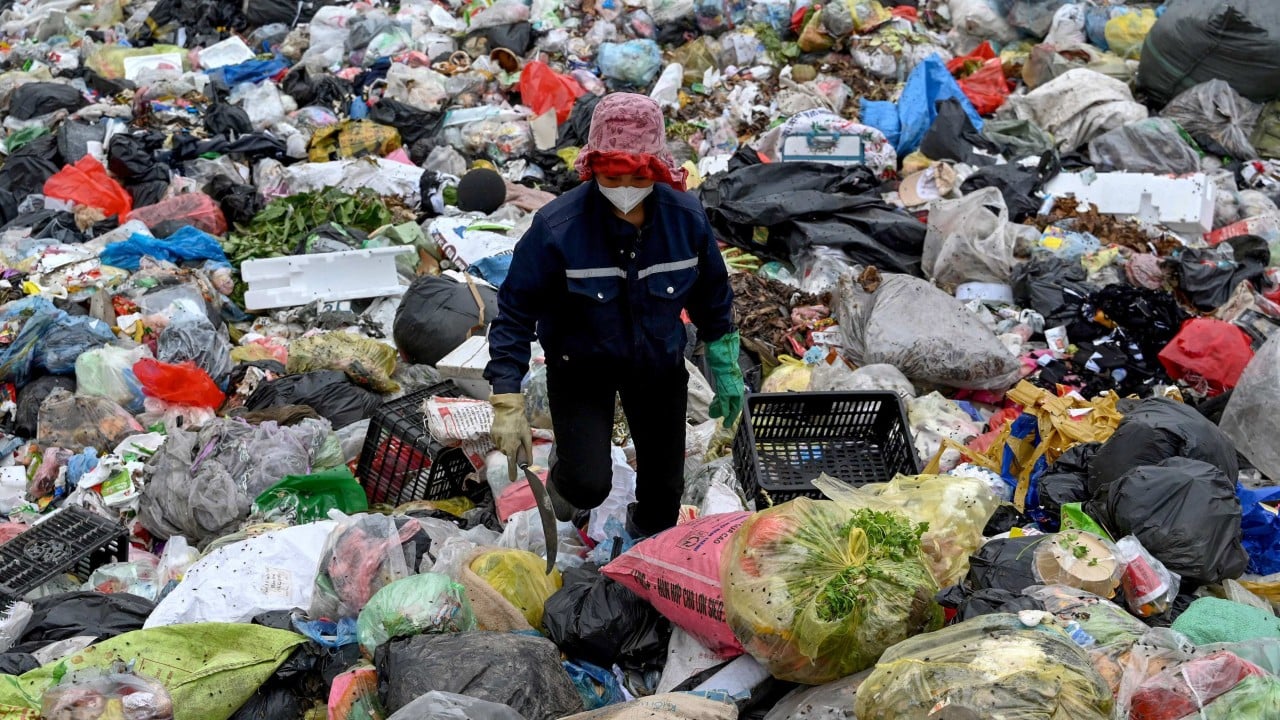
Crouched between mountains of discarded plastic, Lanh strips the labels off bottles of Coke, Evian and local Vietnamese tea drinks so they can be melted into tiny pellets for reuse.
More waste arrives daily, piling up like technicolour snowdrifts along the roads and rivers of Xa Cau, one of hundreds of “craft” recycling villages encircling Vietnam’s capital, Hanoi, where waste is sorted, shredded and melted.
The villages present a paradox: they enable reuse of some of the 1.8 million tonnes of plastic waste Vietnam produces each year and allow employees to earn much-needed wages.
Advertisement
But recycling is done with few regulations, pollutes the environment and threatens the health of those involved, both workers and experts said.
“This job is extremely dirty. The environmental pollution is really severe,” said Lanh, 64, who asked to be identified only by her first name for fear of losing her job.
Advertisement
It is a conundrum facing many fast-growing economies, where plastic use and disposal have outpaced the government’s ability to collect, sort and recycle.
Even in wealthy countries, recycling rates are often abysmal because plastic products can be expensive to repurpose and sorting rates are low.