
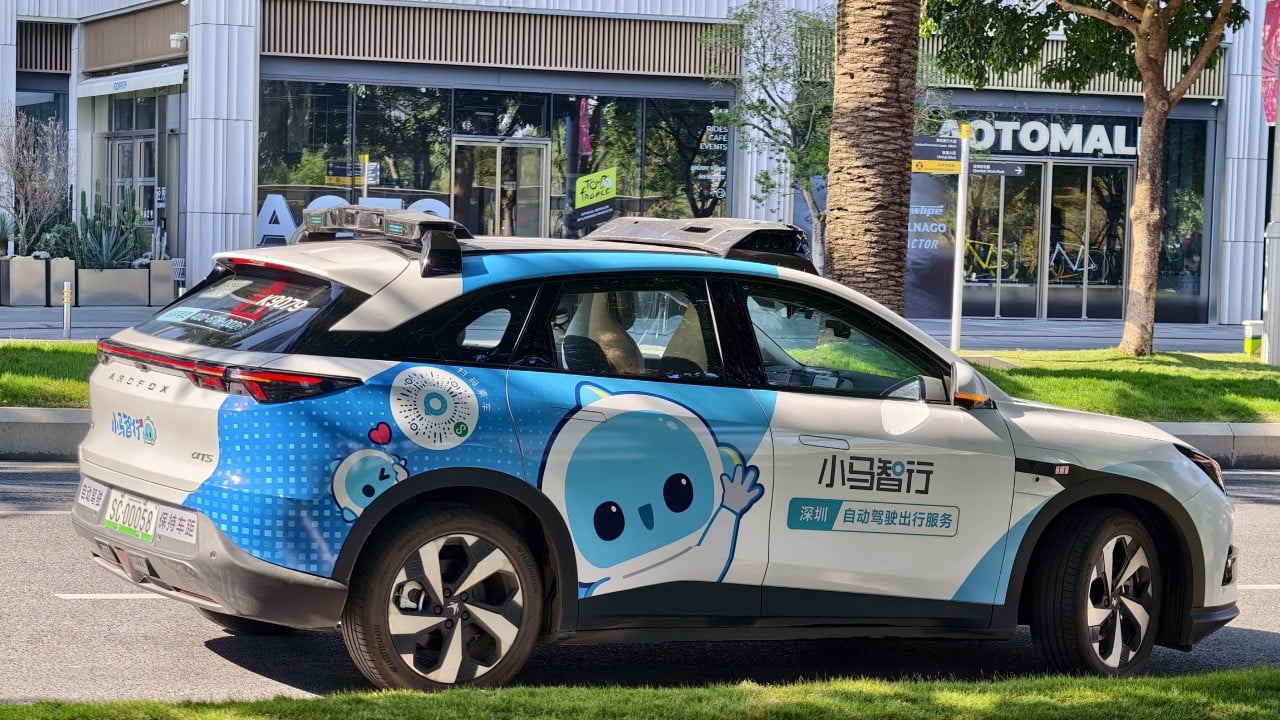
Chinese autonomous-driving technology firm Pony.ai is betting on an “asset-light” strategy and newer generations of low-cost driverless cars to drive growth for its robotaxi operation as the company expects to break even by 2030.
Under the asset-light model, Pony.ai would team up with third-party companies – such as taxi operators or ride-hailing platforms – that would fund the deployment of its robotaxi fleet, according to Leo Wang Haojun, chief financial officer.
Instead of taking on the full weight of owning the fleets, the Guangzhou-based company would sell its driverless cars to third parties and license its autonomous-driving technology and fleet-management expertise for a fee, Wang said. It would also take a cut of fares, he added.
Advertisement
“We expect the asset-light model to enable more efficient [fleet] expansion for us,” Wang said on Thursday.
Last month, Pony.ai expanded its partnership with Chinese ride-hailing company Sunlight Mobility, which operates in more than 180 cities, to deploy an initial fleet of robotaxis in Guangzhou, the capital city of the southern province of Guangdong.
Advertisement
The fleet will use Pony.ai’s seventh-generation vehicles and is scheduled to launch by the end of the year, with plans to expand to more Chinese cities.
The company’s recent announcement that it had broken even in Guangzhou on a per-vehicle basis was a big draw for mobility operators to partner with the company, Wang said. The news validated the model and signalled the increasing sustainability of robotaxi commercialisation, he added.