
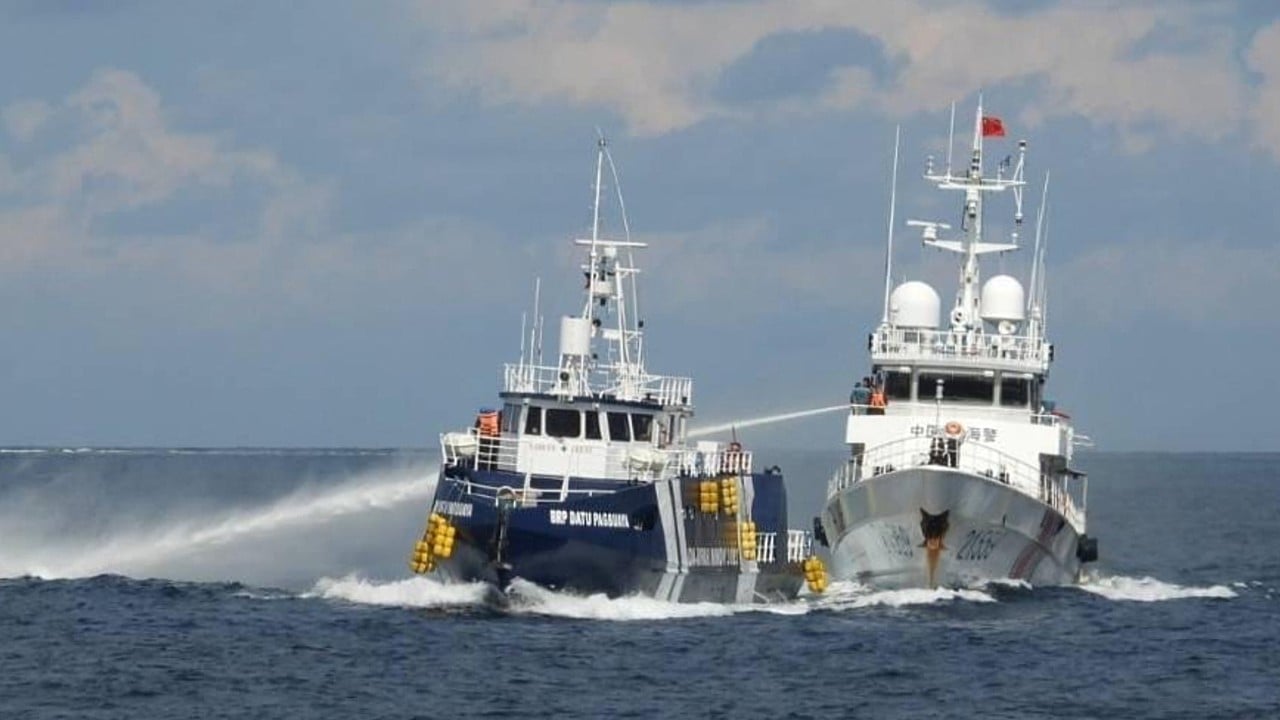
China is willing to work with Southeast Asian countries to manage maritime disputes in the South China Sea and build a fair and just maritime order, a senior Chinese diplomat said.
Speaking in Sanya on the southern island province of Hainan, Sun Weidong, the vice-minister of foreign affairs, also hit out at the recent remarks by Japanese Prime Minister Sanae Takaichi, who suggested last month that an attack on Taiwan by the People’s Liberation Army (PLA) might qualify as a “survival-threatening situation” that could allow Japan to deploy its military forces.
“For example, China’s recovery of Taiwan from the Japanese aggression 80 years ago forms an important part of the post-war international order, yet the leader of Japan recently implied the possibility of armed intervention in the Taiwan Strait, citing the excuse of a ‘survival-threatening situation’,” Sun said at a forum on Wednesday.

New collision of Chinese-Philippine ships in South China Sea
New collision of Chinese-Philippine ships in South China Sea
“This is an open challenge to the post-war international order, and a retrogressive move doomed to fail,” he told Chinese officials, scholars and foreign diplomats at the South China Sea symposium.
Advertisement
Beijing sees Taiwan as part of China to be reunited by force if necessary. Most countries, including the United States and Japan, do not recognise Taiwan as an independent state, but Washington is opposed to any attempt to take the self-governed island by force and is committed to supplying it with weapons.
On Wednesday, Sun also defended Beijing’s decision to reject the 2016 arbitration ruling brought by the Philippines that denied the legal basis of most of China’s “nine-dash line” claims in the South China Sea under the UN Convention on the Law of the Sea (Unclos).
Advertisement
Despite being a party to Unclos, China refused to participate in the arbitration proceedings and stated it would not accept any decision, arguing that the tribunal did not have the jurisdiction to rule on the sovereignty disputes.