
Today is International Human Rights Day. However, in the bustling coffee shops of District 1 in Hồ Chí Minh City, or by the lakeside in Hà Nội, there is little to no fanfare. There are no speeches; only the glow of the newest smartphones, the flash of mindless social media scrolling, and the blur of a society frantically sprinting toward its next paycheck.
To be fair, this indifference is not unique to Việt Nam. Across the globe, International Human Rights Day is largely an abstraction. Despite rallies in some European capitals or well-meaning press releases from the UN, the vast majority of the world will let this day pass without a second thought.
Most people—regardless of demographics or geography—are too consumed by the rising cost of living, the dread of economic collapse, and the addiction to digital entertainment to even think about a declaration signed in 1948.
But while most of the world offers a collective shrug, the silence in Việt Nam carries a much heavier weight.
In other nations, apathy might be born of distraction or fatigue. Here in Việt Nam, society has largely agreed to trade political voice for economic stability. It is a comfortable silence, but it is one bought at the expense of people whose names some citizens will only ever see as a fleeting mention on a screen—if even seen at all.
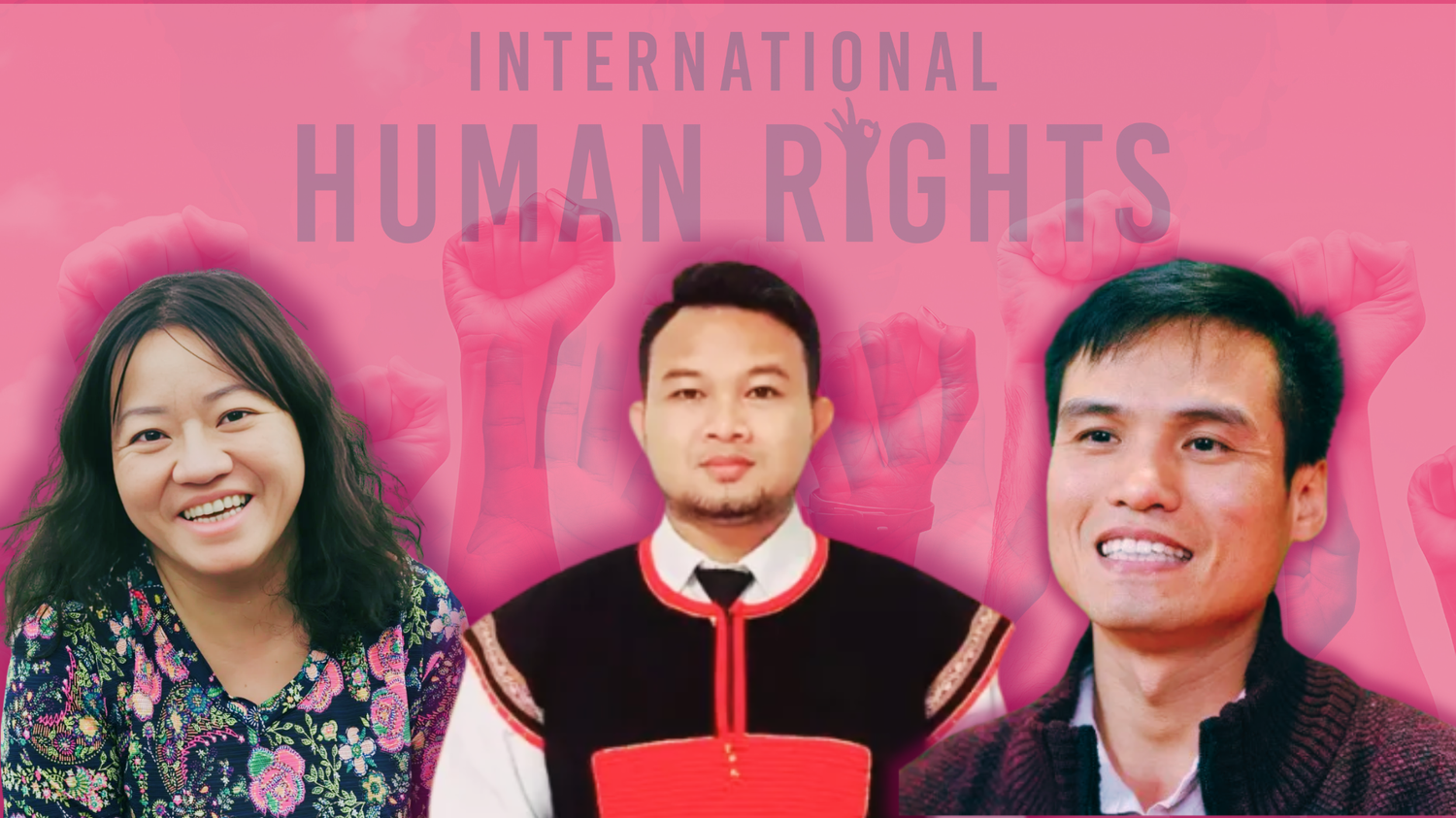
Take Y Quynh B’Đăp. Just weeks ago, he was a UN-recognized and protected refugee in Thailand, a man who believed he had found safety. Instead, he was handed back to the very government he fled to face a 10-year sentence for “terrorism”—a convenient charge for a Montagnard activist who dared to advocate for religious freedom. For the average Vietnamese person, his forced return was just another headline to swipe past, buried instantly under short-form distractions and the noise of the daily grind.
Then there is Đặng Đình Bách, a lawyer who dedicated his life to protecting the environment and urged the state to move away from coal. His efforts were repaid with a five-year prison sentence for “tax evasion”—Việt Nam’s favorite tool for silencing dissenters who cannot be painted as traitors. Bách sits in a cell today because he tried to help a society that—even if it knew the truth—would likely find it safer and easier not to care.
And there is Phạm Đoan Trang, a journalist, an author, and a co-founder of this very publication. She sits in prison today serving a nine-year sentence for the crime of writing books that explain the law to ordinary citizens. She is one of Việt Nam’s most brilliant minds, yet to the office worker rushing to their shift or the street vendor peddling their wares, her name and her story are mostly unknown.
These three individuals—and several more like them—were not fighting for glory or personal gain. Bách did not go on a hunger strike for fame; Trang did not write to get rich. B’Đăp did not sacrifice his freedom for a society that is largely too afraid, or too indifferent, to look him in the eye.
The tragedy of Human Rights Day in Việt Nam is not just the oppression; it is that for the average person, the oppression feels like a fair trade. It is dismissed as just politics; people keep their heads down and refuse to see it as a problem.
But the truth exists, whether the public looks at it or not. International Human Rights Day is not alive in the hollow speeches of bureaucrats or the polite applause of international observers who prioritize GDP over justice. It fights to survive in the dark corners of a prison cell where Đặng Đình Bách refuses to break. It clings to life in the terrifying ordeal of Y Quynh B’Đăp. It refuses to falter in the stubborn, unyielding defiance of Phạm Đoan Trang.
It lives in the hearts of the people who expect nothing, yet give everything. They carry the burden so that others can enjoy the luxury of indifference. However, to let this day pass with mere whispers is an insult to their sacrifice. We sleep more soundly because they do not.