
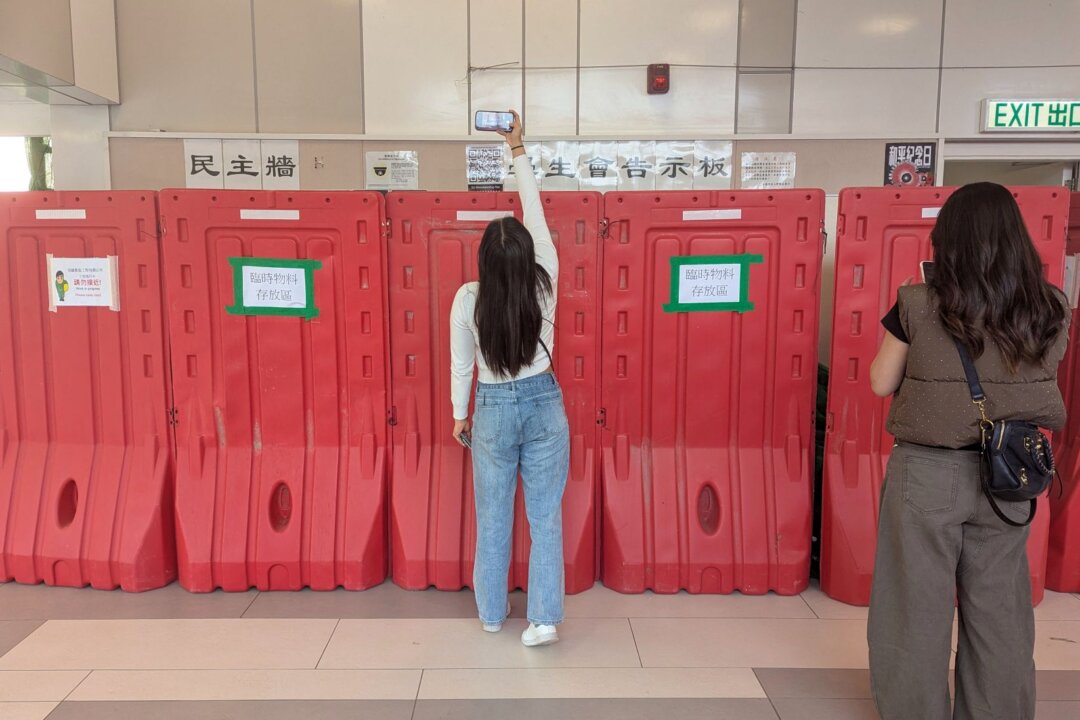
Hong Kong Baptist University (HKBU) has sealed off a student bulletin board after the campus student union posted messages on it on Dec. 2, mourning the victims of a massive residential fire that killed at least 159 people late last month. Several days later, HKBU informed the student union that its operations were indefinitely suspended.
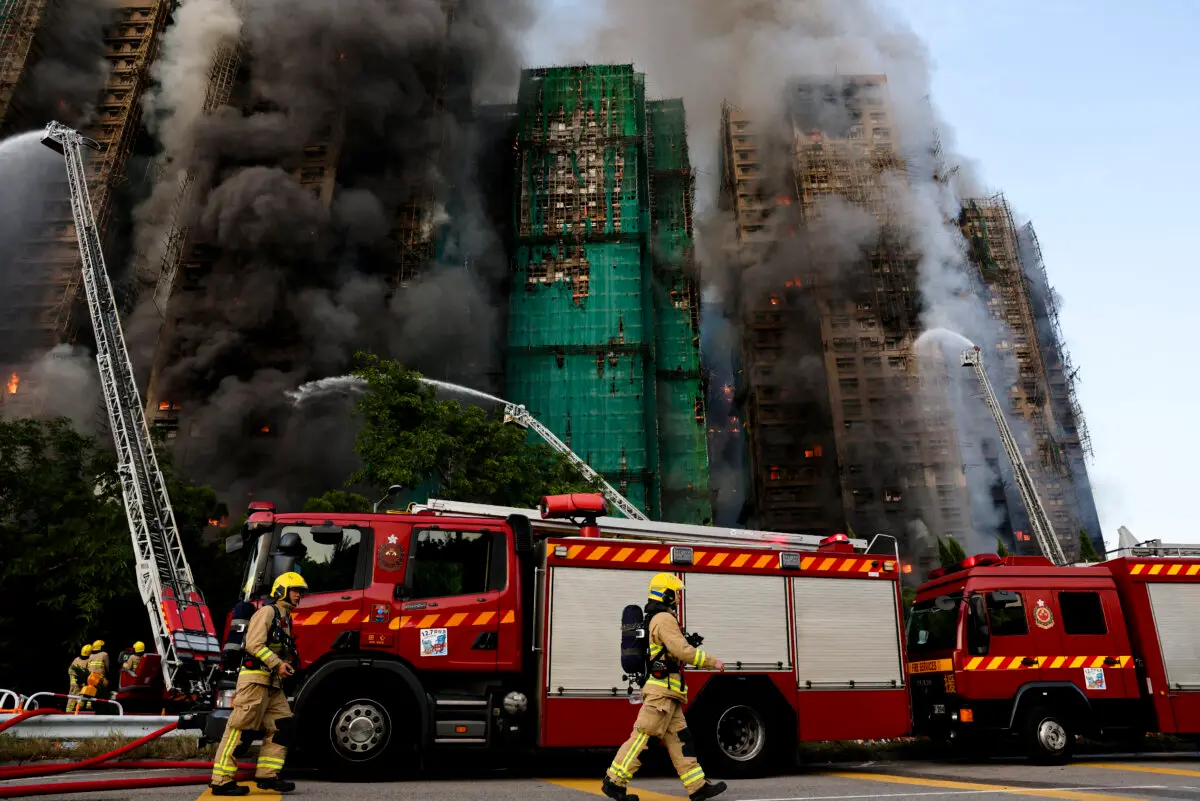
The blaze at Wang Fuk Court, a high-rise residential complex in the city, on Nov. 26 was one of Hong Kong’s deadliest disasters. As the death toll continued to climb, the HKBU Student Union on Dec. 2 hung large posters on its designated bulletin board—often unofficially referred to as the “democracy wall”—reading “In deep mourning for the victims of the Wang Fuk Court fire,” “WE ARE HONGKONGERS,” and “We urge the government to respond to public demands so justice can be served.”
By the next day, the university had blocked the bulletin board with barricades and plastic boards.
The Epoch Times reporters observed that the “democracy wall” beside it was also cordoned off, with layers of barricades and boards restricting access. Through a narrow gap, the original posters could still be seen.
The student union released a statement on Dec. 4, saying it received a sudden notice from the university the previous evening that HKBU would be indefinitely suspending the union. The suspension includes a takeover of the printing room and bulletin boards—facilities historically managed by the union. The university instructed student leaders to remove their belongings and vacate the office by Dec. 6.
The union condemned the decision in the statement as abrupt and lacking consultation, and issued a point-by-point response disputing the university’s stated concerns that the union had too few members and “weak legitimacy.” It called for direct dialogue with administrators to maintain normal student union operations.
HKBU did not respond to inquiries from The Epoch Times regarding the incident or the suspension of the union by publication time.
Public Reactions
The sealing off of the student bulletin board sparked widespread criticism among Hong Kong netizens, who questioned why messages of condolence in this format would be treated as politically sensitive.
Online comments included: “Every word on those posters is normal—why are even the words ‘justice’ taboo now?” and “As an alumnus, I feel ashamed.”
Another wrote, “Even expressing grief isn’t allowed? Should the university prefer we laugh instead?” One user joked that the wall would not have been sealed if the sign had read, “We urge the government to let the matter drop.”
A separate report by local newspaper Ming Pao said that on Dec. 2, the area was labeled a “temporary material storage zone,” with construction netting and other equipment stacked behind the barriers. The report stated that security guards at the university told journalists they could not film freely.
Activists Face Arrest Over Calls for Inquiry
The restrictions at HKBU follow a series of police actions targeting individuals who have demanded an independent investigation into the Wang Fuk Court fire.
On Nov. 29, the pro-Beijing Hong Kong Ta Kung Wen Wei Media Group reported that the organizer of a public petition seeking a four-point list of demands—including an independent inquiry—had been arrested for online “incitement.”
He was seen leaving Cheung Sha Wan Division police station on Dec. 1, Hong Kong Free Press reported, citing the AFP news agency.
On Dec. 1, local media reported that Kenneth Cheung, a former district councillor, was arrested at his home, along with an unidentified volunteer, by the Hong Kong Police National Security Department.
Separately, the Hong Kong Association for Democracy and People’s Livelihood (ADPL), a pro-democracy political party, canceled a planned Dec. 2 press conference on high-rise building safety and fire-related policy issues. Organizers told reporters that a government department had informed them the event must be canceled, but did not specify which department.
Local media also reported that several participants, including ADPL chairman Bruce Liu and commentator Wong On-yin, were contacted by the National Security Department for meetings the same day. Liu told reporters after leaving the police station that he signed a non-disclosure agreement regarding the content of the meeting.
Some Hong Kong netizens have commented online that the government’s response to the fire and related public expressions reflects the city’s accelerating shift toward a mainland China-style governance in recent years, especially after Beijing imposed the National Security Law on the city in 2020.
The tragic incident is now being treated by authorities through a national security lens, similar to that in mainland China under the Chinese Communist Party rule.
Tang Bing contributed to this report.
We had a problem loading this article. Please enable javascript or use a different browser. If the issue persists, please visit our help center.