
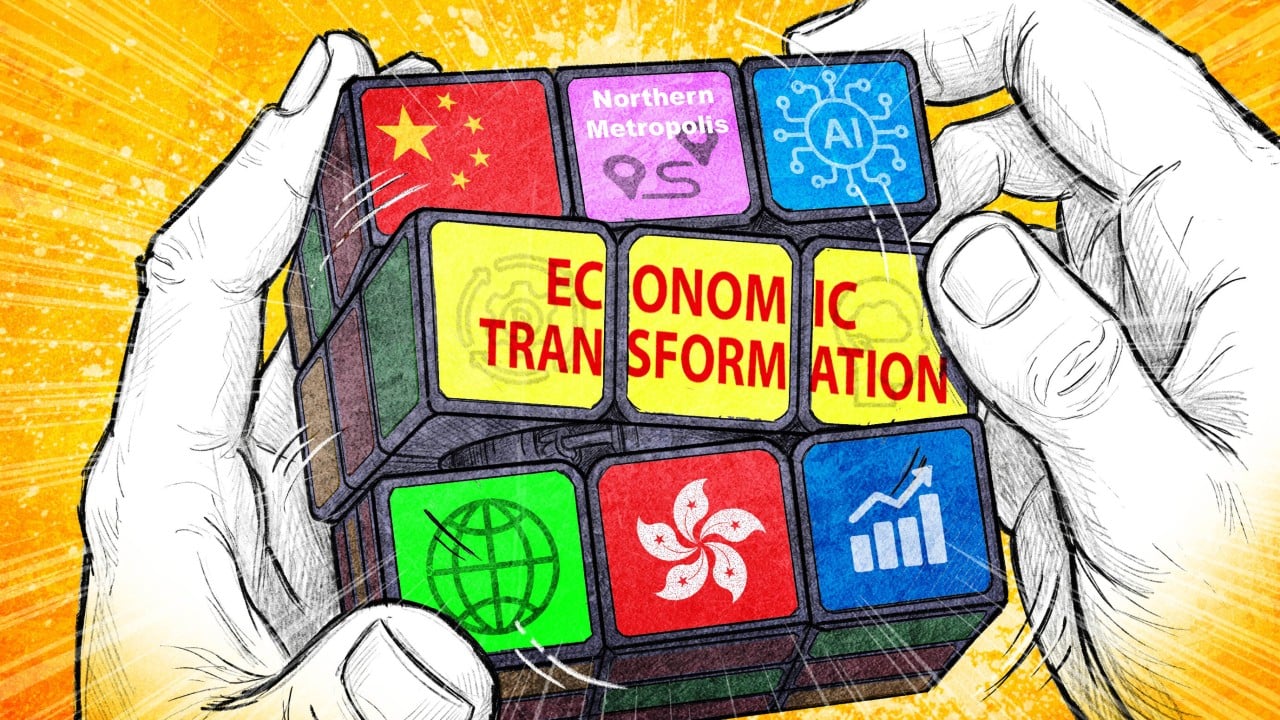
In the first of a two-part series on the economy as Hong Kong marks 29 years since its return to Chinese rule, Denise Tsang and Vivian Au look at efforts at transformation, including the city’s bet on the Northern Metropolis, and the challenges ahead.
Molly Lam lives alone in a public housing flat in Tsuen Wan but fear is a constant companion as she worries about losing her job.
The restaurant worker in her sixties has seen how her company is shrinking its operations amid an industry downturn.
Earning HK$12,000 (US$1,540) a month, which is just enough to cover living expenses, she has little interest in news about a buoyant stock market, a stable unemployment rate or even a strong turnaround in the city’s economic growth.
“These things mean very little to working-class families like me,” she said.
“The administration focuses heavily on high-end IT industries, which offer no safety net for low-skilled labourers like me.”
In North Point, Celeste Yeung, co-founder and chief operating officer of Chinese pastry restaurant Time To Gold, is battling a host of issues. She fears the city’s food and retail sectors are faring worse now than during the three years of the pandemic, which began in 2020.